Newsletter

Get weekly updates from Caroline all about golden age detective fiction.

A Visit to Josephine Tey's Inverness

Dear listeners,

At the very start of the year, when the weather was an awful lot colder than it is now, I got to pay a visit to the birthplace and longtime home of Josephine Tey: Inverness.

My husband Guy and I, along with Morris the dog, were on the way back south to England after spending Christmas and New Year in Orkney. Ages ago, past Shedunnit guest and Inverness resident Jennifer Morag Henderson had offered to show me around if I was ever passing through, and luckily our diaries lined up in early January.

The River Ness in all its almost-flooded January glory.

I first spoke to Jennifer in 2021 for the episode from the Queens of Crime at War series titled Josephine Tey's Golden Age, which is all about the incredible run of novels Tey published in the late 1940s and early 1950s. It was a tremendously productive period for her, as a simple list of titles and dates reveals:

I'm not so keen on To Love and Be Wise or The Singing Sands, but I think for any other writer, just one novel of the quality of Miss Pym Disposes, The Franchise Affair, Brat Farrar or The Daughter of Time would be considered a once-in-a-lifetime career highlight. And Tey produced four such books, all close together at the end of her life! Truly, so impressive.

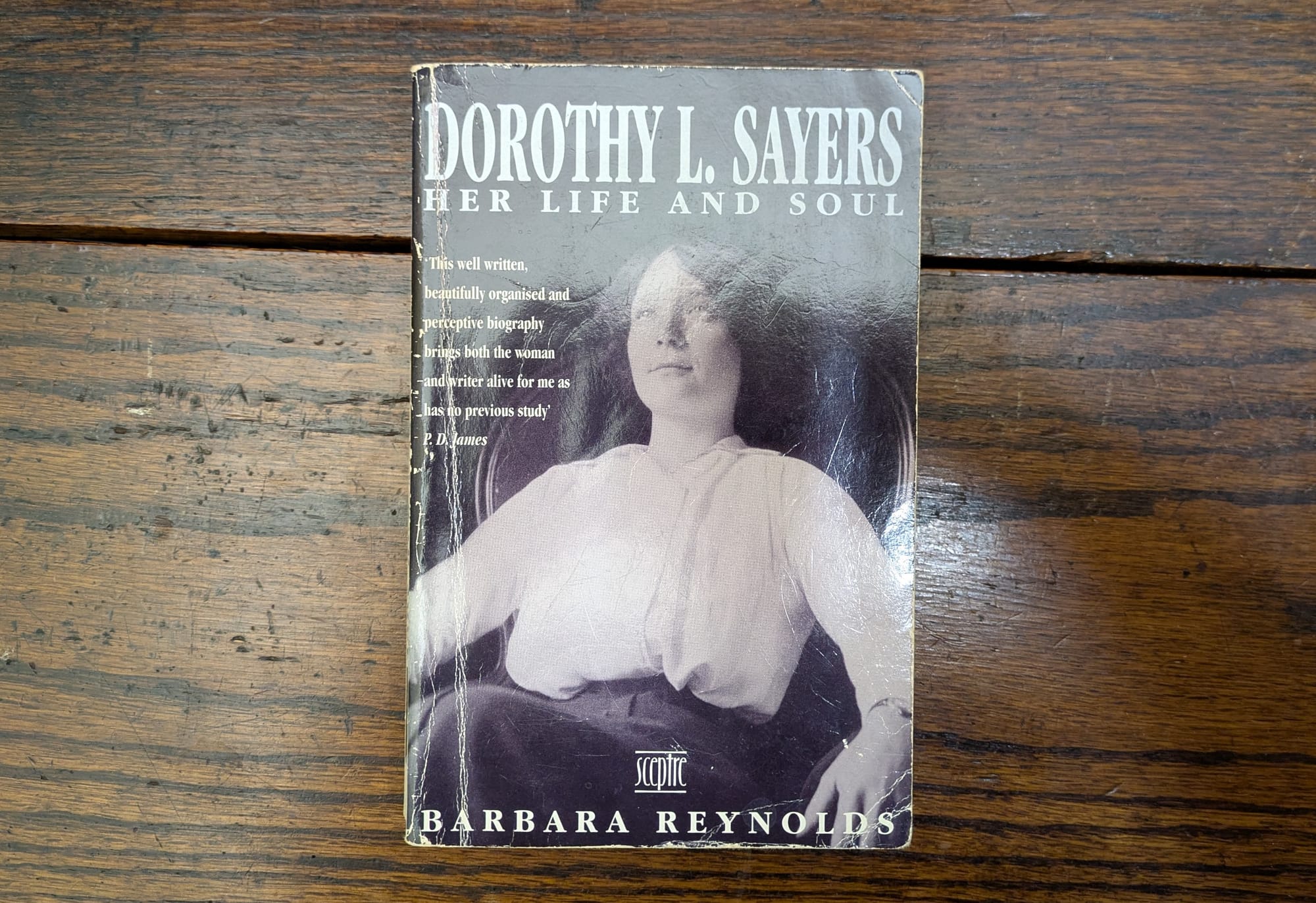
I was a Tey fan long before I spoke to Jennifer, and I had keenly devoured her biography, Josephine Tey: A Life:

One of the things this book does well is to put Tey into context not just as a crime writer revered among the greats of the golden age of detective fiction, but as a Scottish writer of plays and other prose works, and a long-time resident of Inverness.

Inverness is a character in Jennifer's book, which is why it was all the more special to have her play tour guide for the afternoon and show us around her city (after an excellent lunch at the Victorian Market!). Fun fact: Jennifer is also a dedicated fan of the Chalet School series, which I discovered after I published a bonus episode on that subject last year. We had a great time chatting about her adventures in the Tyrol inspired by Jo and co.

Here we are, with Morris the dog, at the site of the Tey/MacKintosh family business on Castle Street:

Caroline, Jennifer and Morris surveying the former site of the MacKintosh family business
Caroline, Jennifer and Morris surveying the former site of the MacKintosh family business.

Josephine Tey's real name was Elizabeth MacKintosh, and her father Colin ran a greengrocer's shop here for most of his life. Jennifer was instrumental in getting the blue plaque erected in 2022.

After taking in the sights in the city centre, we climbed up the hill into the Crown neighbourhood, where plenty of Victorian and Edwardian housing still stands. We paused outside the former site of the Inverness Royal Academy on Midmills Road, where Josephine Tey went to school:

The former Inverness Royal Academy on Midmills Road, now the Wasps Inverness Creative Academy
The former Inverness Royal Academy on Midmills Road, now the Wasps Inverness Creative Academy.

And we also got to peep at a house where she once lived, although it is now in private hands and it didn't seem right to photograph it any more closely. That's her roof, though!

It was a lovely, if quite cold, day. If you ever expect to find yourself in Inverness, I highly recommend perusing Jennifer's book and noting down some key Tey locations to explore.

Finally, I squeezed in a visit to one of my favourite secondhand bookshops: Leakey's.

Such riches!

Until next time,

Caroline

You can listen to every episode of Shedunnit at shedunnitshow.com or on all major podcast apps. Selected episodes are available on BBC Sounds. There are also transcripts of all episodes on the website. The podcast is now newsletter-only — we're not updating social media — so if you'd like to spread the word about the show consider forwarding this email to a mystery-loving friend with the addition of a personal recommendation. Links to Blackwells are affiliate links, meaning that although the purchase price remains the same for you, the podcast receives a small commission for referring you.

Reading Recommendations: Wallace, Heyer, Jackson Bennet, Allingham

Dear listeners,

Shedunnit has joyfully shaken the dust of social media from its shoes — I truly do not miss it at all — but I still want to have a place for sharing and discussing reading recommendations with you all. And so from now on, on the first Monday of each month, you'll receive this rundown of four books from me and my production assistant Leandra. We will each pick one that we have read recently to review and recommend as well as sharing a title we plan to read in the near future. If you have thoughts or suggestions for us, you can reply directly to this email, or post a comment to be part of a bigger conversation with other readers. Here's what we have going on this month:


Caroline Has Read: The Four Just Men by Edgar Wallace

This will be the subject of the next Green Penguin Book Club episode, coming to you later this month, so I picked up this book in preparation for recording with my guest. I think I first read it a long time ago, possibly when I was a teenager, and my memories were that it wasn't great — "a bit of a potboiler" was how I had mentally labelled it. I also think my recollection had been influenced by learning of the fascinating publishing story that surrounds this book (of which there will be much more in the episode, but the gist is that Wallace ran this story as a competition mystery and despite its enormous success managed to bankrupt himself in the process).

Perhaps it is the times we are living through or my deeper understanding of what was happening in crime fiction/thrillers in 1905, but this time around I found myself gripped by this pacy tale of four shadowy vigilantes who seek to punish those who are usually beyond the reach of the law. They come to London to prevent the passage of a bill that would unfairly target a left-wing political activist who has taken refuge from persecution in England. As I read I noted several passages that I felt demonstrated that this book has some interesting things to say about societal systems and fairness, and I'll share one of them with you here:

"The standpoint of the Four is quite a logical one. Think of the enormous power for good or evil often vested in one man: a capitalist controlling the markets of the world, a speculator cornering cotton or wheat whilst mills stand idle and people starve, tyrants and despots with the destinies of nations between their thumb and finger— and then think of the four men, known to none; vague, shadowy figures stalking tragically through the world, condemning and executing the capitalist, the corner maker, the tyrant— evil forces all, and all beyond reach of the law."

I look forward to digging into these themes further on the episode about this book, and to sharing your thoughts about it in the mailbag newsletter that will follow it!

Caroline Will Read: A Blunt Instrument by Georgette Heyer

I am gradually making my way through all of Heyer's twelve detective novels, in order, with the intention of making an episode about them towards the end of 2025. I'm just over halfway through — this is number seven, first published in 1938. My favourite so far is the sharp and witty Behold, Here's Poison from 1936, mostly because it contains a character that I think would fit in well in one of Heyer's Regency novels – a dandy with a languid manner and a heart of gold.


Leandra Has Read: A Drop of Corruption by Robert Jackson Bennett

One of my favorite reads from 2024 was The Tainted Cup by Robert Jackson Bennett, a Sherlockian fantasy-mystery reimagining of A Study in Scarlet. So, naturally, I would be anticipating the second instalment in this series! Our Holmes character is Anagosa Dolabra, a terrifyingly brilliant investigator for the empire whose goal above all else is to seek truth and justice.

In the Watson tradition, her successes are chronicled through the first-person POV of her far more reserved assistant, Dinios Kol. In this sequel, the duo is sent to investigate a locked-room murder mystery that requires them to unravel empire secrets, engage with smugglers, and catch a killer that is always ten steps ahead of them.

I read A Drop of Corruption as soon as was humanly possible, and it is currently the best mystery that I've read in 2025! The character development is stunning, the discussions of empire and justice are spot on, and the puzzle is intricate and multi-layered. I would argue that Bennett plays fair as well for those readers who require that in their crime fiction. Not to mention, I wholeheartedly feel that one does not have to read the series in publication order. I cannot recommend these books enough!

Leandra Will Read: Death of a Ghost by Margery Allingham

Back in May 2024, the Shedunnit Book Club read Black Plumes by Margery Allingham. In preparation for that reading, I purchased a five-book lot of Allingham titles, and Death of a Ghost happened to be among them. Coincidentally, exactly a year later, I am part of another book club that will be reading this latter mystery. I look forward to joining Albert Campion as he yet again steps into the art world. This time around, as he attends the annual unveiling of a painting by the late John Lafcadio, a brutal stabbing steals the spotlight.

I recall enjoying Allingham's tone and narrative style while reading Black Plumes, so I have high hopes for Death of a Ghost!


That's what we've got coming up reading-wise: a Heyer and an Allingham. What are you planning to read this month? Let us know by replying directly or by leaving a comment to join the conversation with other readers.

Until next time,

Caroline

Links to Blackwells are affiliate links; if you make a purchase at this retailer the price remains the same for you but the podcast receives a small commission for referring you.

The Crimes of Dorothy Erskine Muir

Dear listeners,

One of the best things about making Shedunnit is getting to introduce people to lesser-known books and writers that I think are really good. And that's what today's new episode and newsletter are all about: bringing the life and work of Dorothy Erskine Muir to your attention.

Dorothy Erskine Muir, or "D. Erskine Muir" as she was originally known on the covers of her three detective novels, was the pen name of Dorothy Sheepshanks Muir. She was born in 1889 and died in 1977. Her life spanned almost exactly the same period as Agatha Christie's and she went to the same Oxford college as Dorothy L. Sayers, but as far as I know she was never invited to join the Detection Club or have any closer contact with these or any other greats of the genre.

Yet her crime fiction, to my mind, holds its own with the best of the 1930s and 1940s. Her three novels received some good reviews when they were first published, but did not make enough of an impression to survive in print through the second half of the twentieth century. I suspect it also wasn't lucrative enough for Erskine Muir to give up her day job tutoring candidates for Oxford University entrance to produce more detective fiction.

As is often the case with writers who were not especially prolific, her name quickly dropped out of sight when later critics were looking back on interwar crime fiction. It is only thanks to the new editions from Moonstone Press that have been published in the last few years that we can read her easily today. And we should be reading her — I hope the new episode will whet your appetite to pick up one of her books, if you haven't already.

📣
You can listen to this episode right now on all major audio platforms (just click the icon of your preferred app here to jump right in) as well as on the podcast's website, where there is also a full transcript to read if you prefer that. New episodes are also available on YouTube. If you're in the UK, you can listen ad free on BBC Sounds.

So, to look a little closer at these three books. In Muffled Night appeared in 1933, Five to Five in 1934 and In Memory of Charles in 1941. The first two share a detective — a persistent, moral sleuth from Scotland Yard called Inspector Woods — while the third stands alone in that regard. All three are concerned with the murder of an unpleasant authority figure and the ramifications that this has for their families and dependents. The books also deal in a familiar golden age milieu, focusing mostly on middle and upper class people in comfortable dwellings, both in the city and in the countryside.

Where these three novels stand out is in their relationship to real life crimes. For each book, Erskine Muir took as her starting point an actual murder case. The ones for In Muffled Night and Five to Five are easily identified as the Sandyford case from 1862 and the Marion Gilchrist/Oscar Slater case from 1908. The author assures us in a prefatory note that In Memory of Charles is also based on a case that "really happened, in the way described, and it was solved in the way described, but not in this country", although neither I nor any other critics have so far been able to identify the events to which she is referring.

Basing a novel on a real life murder is not that exceptional. Many writers did it, from F. Tennyson Jesse's take on the Edith Thompson case in A Pin to See the Peepshow to Agatha Christie's use of the Lindbergh kidnapping in Murder on the Orient Express.

What struck me as unusual about Erskine Muir's project was that she very deliberately, I think, chose cases in which there had been no official solution. Both the Sandyford and the Gilchrist/Slater case resulted in a major miscarriage of justice, with an innocent person going to prison for many years on flimsy evidence, and no true perpetrator ever found. In her fiction, then, she rewrites a version of history and gives crime fiction fans a satisfying, logical solution to a series of events that, in reality, never had such a resolution.

As a detective novel, I found In Muffled Night to be the most successful. Erskine Muir transplants the events of the Sandyford case from 1860s Glasgow to 1930s London, but keeps the essential details of a servant violently and fatally attacked in a house that is empty for the weekend other than her elderly and autocratic employer — who denies all knowledge of the event. For me, this book strikes the best balance between a richly-drawn scenario, a clever puzzle, a dogged investigation, and an eventual conclusion that highlights the fact that murder is, ultimately, not a fun puzzle but a devastating evil, no matter how cleverly it is done.

That's not to say that Five to Five and In Memory of Charles aren't worth reading too — the latter is more of a psychological novel than a novel of detection, so some readers who incline more to that side of things may even prefer it. Each represents an interesting fusion of true crime consideration with the conventions of golden age detective fiction.

📚
Moonstone Press are very kindly running a special offer for the next 30: if you buy the paperback set of Erskine Muir's three novels, you get three for the price of two and the podcast gets a little commission for referring you. Take advantage of the special offer at ⁠moonstonepress.co.uk⁠.

As research for this episode, I also read Dorothy Erskine Muir's 1955 memoir Lift the Curtain, which covers the years from her birth until her brother William was killed in WWI in 1917. She had a pretty unusual childhood as one of the 17 children of John Sheepshanks, an Anglican vicar and later the Bishop of Norwich, and I found this to be a very evocative account of what was already quite an old-fashioned childhood in the early 1900s.

Sadly, this book has not been republished anywhere that I can see, but I was able to get it from the London Library so other similar institutions might still have it. As someone who absolutely loves a family tree in the start of a book, this one did not disappoint:

You can see Dorothy down there on the bottom right, with only William and Thomas being younger in the Sheepshanks family than she was.

If you have already read some Dorothy Erskine Muir detective fiction, or you pick it up after hearing this episode, do let me know how you get on — just reply to this email or leave a comment on this post here.

And before I go, if I could just alert you to the existence of the Shedunnit Listener Survey, which will be open for contributions for the next four weeks. This is a quick feedback form aimed at helping me better understand how you listen to the show and what you would like to see from it in the future — your responses will stay entirely anonymous and you can opt out of any questions you don't want to answer. It is really helpful for me to know what aspects of Shedunnit people enjoy, though, so that I can plan for the future. Take part here.

That's all for today — I'll be back on Monday with the first of our monthly reading recommendation round-ups.

Until then,

Caroline

You can listen to every episode of Shedunnit at shedunnitshow.com or on all major podcast apps. Selected episodes are available on BBC Sounds. There are also transcripts of all episodes on the website. The podcast is now newsletter-only — we're not updating social media — so if you'd like to spread the word about the show consider forwarding this email to a mystery-loving friend with the addition of a personal recommendation. Links to Blackwells and Moonstone Press are affiliate links; if you make a purchase at these retailers the price is the same for you but the podcast receives a small commission for referring you.