Newsletter

Get weekly updates from Caroline all about golden age detective fiction.

Sherlock and Shedunnit

A trip into the Shedunnit archive.

Dear friends,

There are certain topics that are too perfect for Shedunnit, and so even though I think about them all the time, I have never made an episode about them. Sherlock Holmes is one of these.

Let me explain.

The influence of Arthur Conan Doyle's creation on the golden age of detective fiction cannot be overstated. Some of the foremost mystery writers of the 1920s and 1930s — including Agatha Christie and Dorothy L. Sayers — were self-professed fans. Sayers was even something of a Sherlockian; her essay “The Dates in the Red-Headed League” is an exercise in scholarly pedantry that has to be seen to be believed.

Even beyond the explicit references to Holmes as a character, the fundamental structures of client-detective and Holmes-Watson are everywhere in the puzzle-based mystery. It's no accident that an elderly and ailing Conan Doyle was asked to be the first president of the Detection Club (he sadly passed away soon after receiving the invitation and the honour went to G.K. Chesterton instead).

The Sherlock Holmes mural at Baker Street Underground station. Photo by Mingyang LIU
Photo by Mingyang LIU

It's this ubiquity that has stopped me every time I have considered trying to put together a "Sherlock Holmes" episode of Shedunnit. There is just so much to say, and such a knowledgeable audience out there, that I fear anything I might do would be incomplete and unoriginal. And so, I avoid the great detective in favour of subjects that are easier to encapsulate in a 25-35 minute podcast episode.

But the podcast's archive is not a completely Sherlock-free zone. Such is his fame that even when I am avoiding him, he creeps in. Now that we are almost at the midpoint of 2025, I am looking ahead to the first half of next year and thinking about the topics I might cover (yes, I do plan that far in advance)... Maybe it's time to visit 221B Baker Street at last? Let us review his appearances so far, at least.

He popped up earlier this year, in fact, in the "Agatha Christie's Taste in Crime Fiction" episode:

As is so often the case with any consideration of twentieth century crime fiction, Sherlock Holmes is where we must begin. And I think there is a fair case to be made that that is where Agatha Christie began too, in her reading of crime fiction. In her autobiography she explains that it was her sister Madge who, was eleven years older, who introduced her to the sleuth of 221B Baker Street, via the 1892 story "The Adventure of the Blue Carbuncle". Although the chronology nor indeed the contents of the autobiography is not always entirely to be trusted, Christie includes this recollection about Madge and Conan Doyle in a section about this married sister's visit home to Torquay just after her son was born, which was at the end of the summer in 1903. Agatha would have been thirteen, which in my view is just the age to start reading the adventures of Holmes and Watson. She records that aside from "The Blue Carbuncle", it was "The Red-Headed League" and "The Five Orange Pips", which also appeared in 1892's The Adventures of Sherlock Holmes, that she liked best. More experienced Sherlockians might have theories about what unites these three stories, but to me it seems as if these are all tales with an origin point in the mundane and domestic — the loss of a Christmas goose, a strange job advertisement, a peculiar letter. And we know, of course, what good use Agatha herself was going to put such innocuous elements in her own fiction.

It tickles me enormously to think of a teenage Agatha Christie poring over her Sherlock Holmes stories.

A Player's cigarette card showing an illustration from "The Adventures of Sherlock Holmes". Image: George Arents Collection, The New York Public Library. "Sherlock Holmes." The New York Public Library Digital Collections, 1850 - 1959

As keen listeners of the 2022 live episode "A Prize Mystery" might remember, before she became very famous Agatha Christie was a keen entrant in a number of "competition mysteries". I don't know if she entered this one judged by Conan Doyle himself, but I'd like to think she would have had a go:

In March 1927, Sir Arthur Conan Doyle published an article in the Strand magazine in which he finally bid farewell to readers of Sherlock Holmes — making rueful reference to the fact that he had, of course, tried the dispense with the character once already only to resurrect him due to popular demand. But now, as the 1920s were coming to a close, the last collection of Holmes short stories, The Case-Book of Sherlock Holmes was about to be published... To mark this moment of farewell, then, he proposed what he called a small competition as "a little test of the opinion of the public". Conan Doyle wrote his own list of what he considered to be the twelve best Sherlock Holmes stories and left this in a sealed envelope with the editor of the Strand. The reader who wrote in with a list of a dozen titles that mostly closely coincided with the author's own selection would win £100 and an autographed copy of his autobiography, Memories and Adventures. It's not quite the solution to a crime, but it is still a contest between writer and reader. Who knew Sherlock Holmes better, his creator or his fans?

You can read Conan Doyle's full essay and selection here. Apparently the competition winner correctly guessed ten out of twelve stories.

Actor John Wood as Sherlock Holmes in a 1974 Broadway stage production
Actor John Wood as Sherlock Holmes in a 1974 Broadway stage production. Image: Billy Rose Theatre Division, The New York Public Library. The New York Public Library Digital Collections. 1974.

In my 2021 reading experiment, "A Century Of Whodunnits", I read The Return of Sherlock Holmes as my book from the first decade of the twentieth century. Here's what I made of it then:

Turning the pages, it felt a bit like I was reading a kind of source text out of which everything in the next couple of decades was going to expand. "The Adventure of the Empty House" is a clever locked room mystery. "The Adventure of the Dancing Men" is a case that turns on code breaking. "The Adventure of the Solitary Cyclist" is an inheritance mystery. "The Adventure of the Priory School" features a criminal that deliberately tries to hoodwink the detective when it comes to forensic observation. "The Adventure of the Abbey Grange" sees the detective act not only as investigator, but judge and jury too. I could go on. Each story contains at least one aspect that other writers would enhance and develop into entire plots and subgenres in the decades to come.

I think perhaps part of my hesitation to make an episode dedicated solely to Sherlock Holmes stems from the fact that it's been a long time since I read the actual stories. I consume a lot of Holmes at second and third hand, it feels like, through the detective fiction that was influenced by Conan Doyle and the ever-present adaptations, but it's rare that I read the real thing.

William Gillette as Sherlock Holmes in the original stage production from 1900
William Gillette as Sherlock Holmes in the original stage production from 1900. Image: Billy Rose Theatre Division, The New York Public Library. "William Gillette in Act III of Sherlock Holmes" The New York Public Library Digital Collections. 1900

Lastly, since the English season is well under way, I must just touch on the connection between Conan Doyle, crime and cricket. Even though the author was a keen cricketer himself, there are only passing references to the sport in two Sherlock Holmes stories, I learned from making the "Cricket and Crime" episode. That hasn't stopped fans from filling in that gap, though, as my guest Andrew Green explained:

There's two novels in particular that place Holmes at some very kind of significant cricket matches. One of those is by Arunabha Sengupta, and it's a book called Sherlock Holmes and the Birth of the Ashes, which places Holmes at the famous match where the bales were burned to create the ashes, which is what is played for every time England and Australia play each other in a test series. And another book called Sherlock Holmes at the 1902 Test by Stanley Shaw. Other people have decided that they want to bring cricket into Holmes in a way that Doyle didn't.

So, what do you think? Should a Sherlock Holmes episode of Shedunnit be something I work towards? Is there anything that I can add to the already-vast canon of Sherlockian thought? I will, as ever, value your input here.

Until next time,

Caroline

You can listen to every episode of Shedunnit at shedunnitshow.com or on all major podcast apps. Selected episodes are available on BBC Sounds. There are also transcripts of all episodes on the website. The podcast is now newsletter-only — we're not updating social media — so if you'd like to spread the word about the show consider forwarding this email to a mystery-loving friend with the addition of a personal recommendation. Links to Blackwell’s are affiliate links, meaning that the podcast receives a small commission when you purchase a book there (the price remains the same for you).
The Murder Mystery Hotline Is Open

Lighthouses, chocolate, harps, China and more.

Dear listeners,

There are many, many things that I love about interwar detective fiction — I wouldn't have been doing a podcast about it for coming up to seven years otherwise — but one of my favourite aspects is its variety. The sheer number of different authors, plots, settings and styles never ceases to amaze and delight me. The fact that this one genre and period unites books as different as, say, And Then There Were None by Agatha Christie and Mystery in the Channel by Freeman Wills Crofts is both weird and wonderful.

I'll take any excuse to explore this vast literary terrain. And today's new episode gives me the best possible reason to do so: listeners wanting book recommendations! I've brought back the Murder Mystery Hotline from 2023 and it's open to new calls.

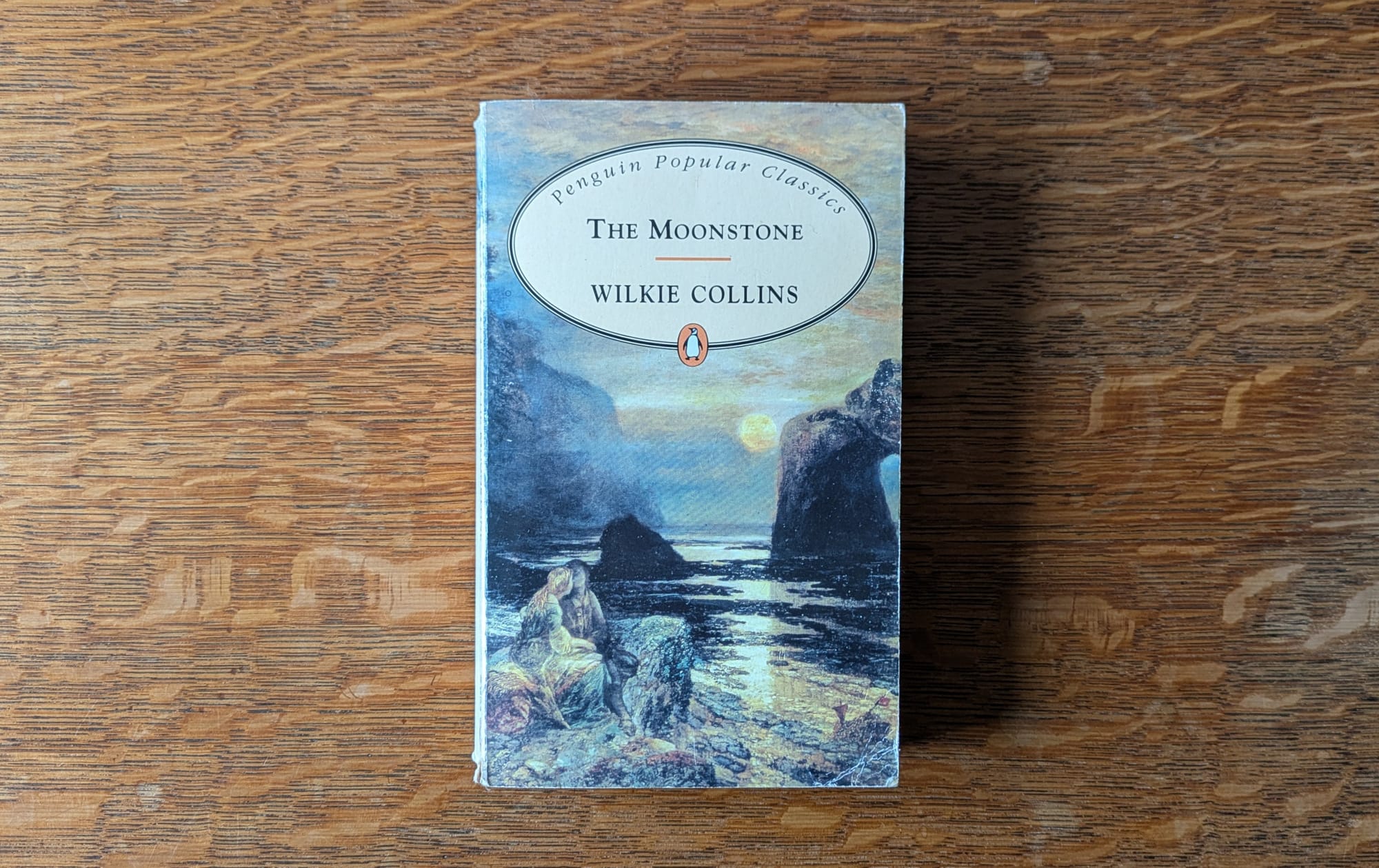
Once again, members of the Shedunnit Book Club provided a wide variety of interesting requests. For their prompts, I went looking for mysteries set in lighthouses and in Ireland, as well as ones that involved Chinese artefacts and Easter chocolates. Along the way, I learned fascinating things about Norwegian crime fiction publishing traditions and the career of Irish writer Sheila Pim, among many other things. I got to read a play by Wilkie Collins, a photographically illustrated short story by Rex Stout and multiple tales involving vanishing harps. Truly, this was one of the most fun reading lists for an episode I've ever had.

📣
You can listen to this episode right now on all major audio platforms (just click the icon of your preferred app here to jump right in) as well as on the podcast's website, where there is also a full transcript to read if you prefer that. New episodes are also available on YouTube. If you're in the UK, you can listen ad free on BBC Sounds.

And if you'd like to be able to submit a request for a future murder mystery hotline episode, become a member of the Shedunnit Book Club today. As well as the chance to take part in episodes like this, members get ad free episodes, extra audio content and access to a marvellous community that reads a different murder mystery together every month. We are currently reading  Lady Molly of Scotland Yard by Baroness Orczy, a slightly pre-golden age story collection, and I'd love for you to join us in time to discuss it together at the end of the month.

Before I go, here is a picture of Morris the dog swimming around a lighthouse near where we live:

Until next time,

Caroline

You can listen to every episode of Shedunnit at shedunnitshow.com or on all major podcast apps. Selected episodes are available on BBC Sounds. There are also transcripts of all episodes on the website. The podcast is now newsletter-only — we're not updating social media — so if you'd like to spread the word about the show consider forwarding this email to a mystery-loving friend with the addition of a personal recommendation.

Reading Recommendations: Rolls, Ferguson, Cadfael, Rinehart

Dear listeners,

We're back with another monthly book recommendation newsletter, sharing what I and Shedunnit production assistant Leandra have been spending our reading time on recently. I really enjoyed chatting to some of you in the comments last time and got some good ideas there for future reads, so please do let us know your own reading plans for this month if you have a moment.


Caroline Has Read: Family Matters by Anthony Rolls

I picked up this 1933 novel by "Anthony Rolls", the pseudonym of the Welsh critic Colwyn Edward Vulliamy, as part of my research for an upcoming episode of the podcast. I was reading a lot of books very quickly to prepare for an interview and when I do that I don't tend to savour them, just absorb the key points as quickly as possible. However, I found that I couldn't not slow down and enjoy Family Matters to the full.

The influence of Anthony Berkeley's Francis Iles books is clear here, in a good way. Family Matters is written as a howdunnit — in the sense that we know all along who is trying to poison the principal murder victim and why — but with an unusual take on the format that I had not encountered before. Said victim is an unpleasant eccentric with a handful of all-consuming passions: for his terrible amateur archaeology collection, for the Mosley-esque club he belongs to called the Rule Britannia League, and for his own health, which he constantly attempts to improve with various crackpot home remedies. His wife and son do not number among his interests. Could there be a more ideal poisoning victim for a golden age mystery?

Martin Edwards notes in his introduction to this British Library edition that Dorothy L. Sayers was a big fan of this book, even to the point that she was willing to suspend disbelief on some of its scientific details — unusual for her, a stickler for accuracy. "I am quite ready to accept anything that is told me by so convincing an author," she wrote in her review. I felt the same! In the best detective fiction, the technicalities are there only in service of a great story, and that's the case here.

I did also follow my plan from last month and read A Blunt Instrument by Georgette Heyer, but I think you'll have to wait for the Heyer episode that's coming later in the year to hear my thoughts on that.

Caroline Will Read: Death of Mr Dodsley by John Ferguson

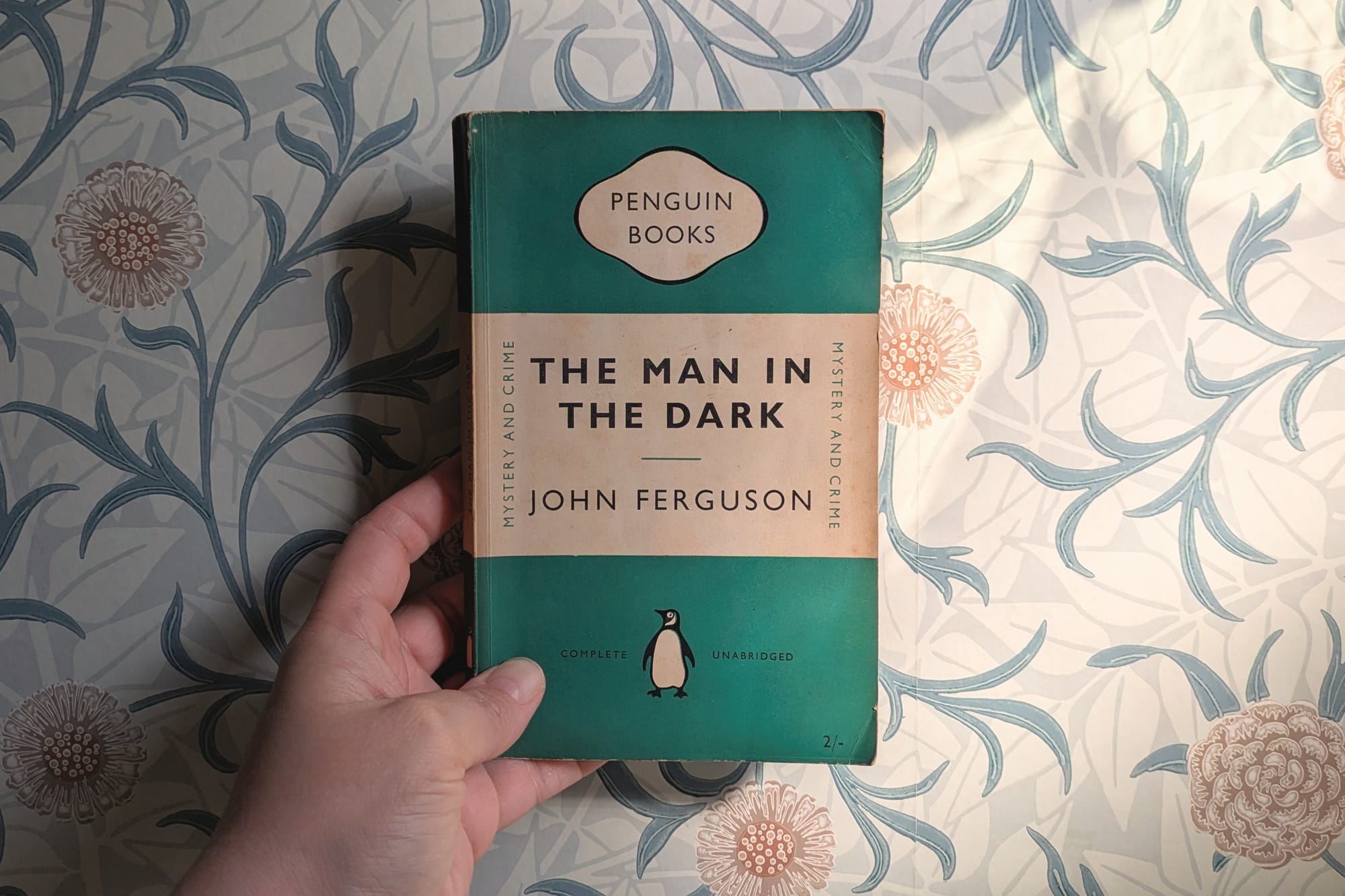
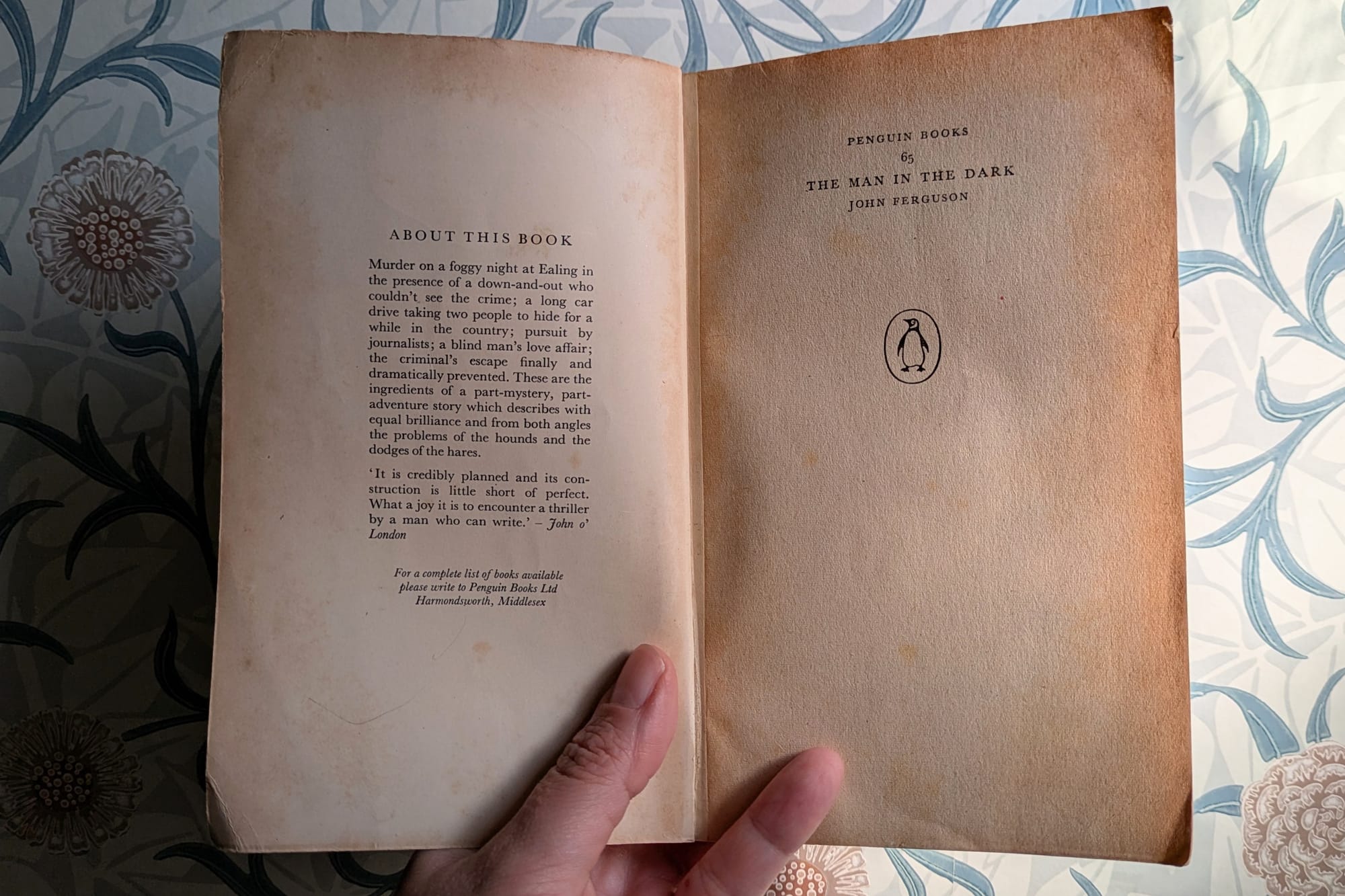
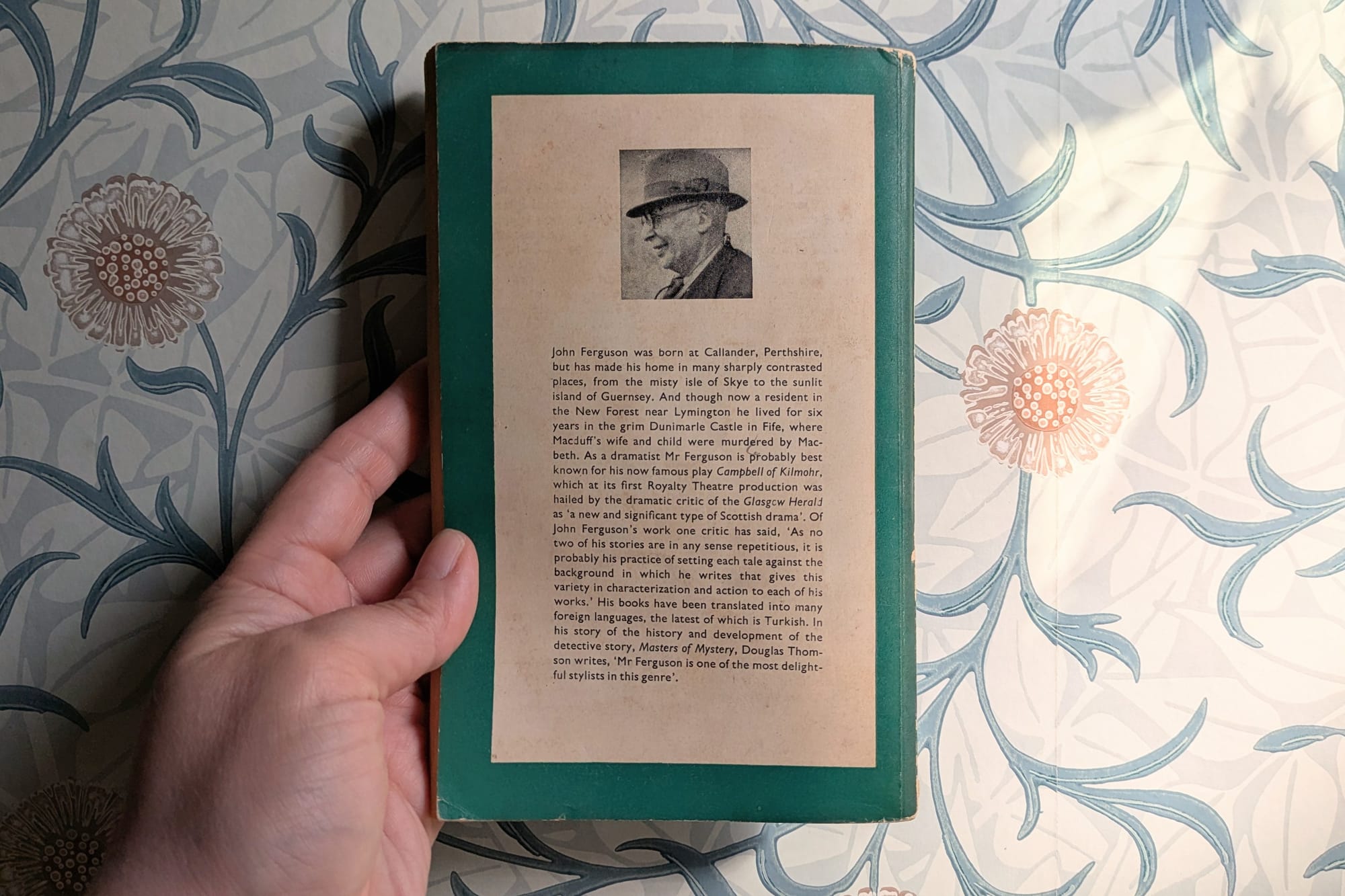
The next title coming up in the Green Penguin Book Club series is The Man in the Dark by John Ferguson, an entirely new author to me. In an attempt to deepen my knowledge before I record the episode with my guest, I'm going to read this other Ferguson title that was republished by the British Library Crime Classics series in 2023. The cover says it is a "London bibliomystery", which bodes well, I feel.


Leandra Has Read: A Morbid Taste for Bones by Ellis Peters

When Prior Robert of Shrewsbury Abbey decides to acquire the remains of Saint Winifred for his Benedictine order, Brother Cadfael joins the group of monks sent to her final resting place: Gwytherin, Wales. Not long after their arrival, the man in greatest opposition to moving the grave is found dead, having been killed with an arrow. Some say Winifred herself dealt the blow, but Brother Cadfael knows this was a murder committed by human hands.

I finally read the first book in Ellis Peters' Cadfael Chronicles! While I love historical mysteries, I don't often linger outside of the 19th- and 20th-century settings. So starting this well-loved series set in the 12th century was definitely a step outside my comfort zone. I thoroughly enjoyed the mystery plot, even though the whodunnit's solution was quite predictable. My favourite elements include Peters' imagery, the tension between English and Welsh characters built from a long and turbulent history, and the linguistic moments with Brother Cadfael acting as translator. Throughout the entire story, I rooted for the residents of Gwytherin to keep Saint Winifred in her rightful place!

I will certainly continue this series.

Leandra Will Read: The Album by Mary Roberts Rinehart

The residents of Crescent Place become a sensation in the papers when one of them is killed with an ax. Decades-worth of family secrets and drama among neighbours rise to the surface, and it seems the murderer is just getting started.

I am five chapters into this nearly 400-page mystery by the author frequently described as the "American Agatha Christie". While I see no resemblance to Christie yet, in either writing style nor plotting, I am intrigued so far. We follow the case through the eyes of Louisa Hall, described by one reporter as: "Twenty-eight and attractive, but wilting under the thumb of her domineering mother." Perhaps it's too soon to make this comparison, but Louisa's narrative voice reminds me of the narrator in Rebecca by Daphne du Maurier.

Tune in next time for my final thoughts.


That's what we've got coming up reading-wise. What are you planning to read this month? Let us know by replying directly or by leaving a comment to join the conversation with other readers. If you'd like to follow our reading adventures in between these posts, I (try to) publish monthly reading updates on my blog/newsletter and Leandra documents what she's reading on her YouTube channel.

Until next time,

Caroline

Links to Blackwells are affiliate links; if you make a purchase at this retailer the price remains the same for you but the podcast receives a small commission for referring you.