Newsletter

Get weekly updates from Caroline all about golden age detective fiction.

Reading Recommendations: Ferguson, Kennedy, Rinehart, Osler

Dear listeners,

It's time for another monthly book recommendation newsletter, in which I and Shedunnit production assistant Leandra offer you a peek of our personal reading experience. There was some excellent chat in the comments of last month's edition, so if you have suggestions for what we should read next or thoughts about any of the books we mention after perusing the below, please do let us know.


The Death of Mr Dodsley by John Ferguson, still full of my tabs because it gave me an idea for a future episode of Shedunnit!
My copy is still full of my tabs because it gave me an idea for a future episode of Shedunnit!

Caroline Has Read: The Death of Mr Dodsley by John Ferguson

As I noted in last month's recommendations newsletter, the next title in the Green Penguin Book Club series is The Man in the Dark by John Ferguson from 1928. That episode will be coming out next Wednesday, 9th July, if you are eagerly anticipating it! The Death of Mr Dodsley from 1937 was the only other Ferguson novel that I could find in an easily-accessible edition (it was republished by British Library Crime Classics in 2023) so I read this as part of my preparation for the episode.

There lots of things to like about this book. It has a dramatic opening scene in the Palace of Westminster, as MPs are enduring an all night sitting of the House of Commons and waiting for an important vote on a key amendment. Meanwhile, at a secondhand bookshop on the Charing Cross Road, a bookseller named Mr Dodsley is being murdered while a drunk toff is giving two patrolling police officers the runaround on the street outside. There's even a cat that uncovers a key clue and a hand drawn map of the bookshop! All great fun.

Where this book fell short for me was in its pacing. After this promising start we spent what seemed like a very long time with a rather dull police inspector as he questions all the workers in the shop one by one, and this frankly felt repetitive and rather redundant. The narrative momentum improved again later on as Ferguson's recurring sleuth Francis McNab was able to take more initiative in the case, but to my mind the book never wholly recover from its slow middle section. A mixed experience, then, although reading this book has inspired an idea for another episode of the podcast that I hope you will get to hear in August.


Caroline Will Read: The Feast by Margaret Kennedy

In July, the Shedunnit Book Club has chosen to read a novel with a hotel or resort setting and picked this story set in a fading hotel on the coast in Cornwall in 1947. I had never heard of it before a member proposed that we read it, so I'm excited to get stuck in and find out what Kennedy did with this premise. All I know of her is that in 1924 she made a big splash with a book called The Constant Nymph, but given that more than two decades separate that from The Feast, I'm not assuming that they will have a lot in common.


Leandra Has Read: The Album by Mary Roberts Rinehart

The Album by Mary Roberts Rinehart

Last month, I promised to report back on my first experience with the "American Agatha Christie", aka Mary Roberts Rinehart. Originally published in 1933, The Album opens with the residents of Crescent Place discovering that one of them has been axed to death. The mystery becomes ever more twisted as more victims are slain one after the other.

Admittedly, I entered the novel with some apprehension! A friend of mine recently abandoned The Album, giving up halfway through it. Not to mention, I'm always suspicious of any comparison to Agatha Christie. And yet, I was pleasantly surprised. The conclusion to the mystery plot is outlandish, but I thoroughly enjoyed seeing the world through protagonist Louisa Hall's eyes. She is both sheltered and restricted by Crescent Place, a cul-de-sac impervious to the societal progress occurring outside these five Victorian mansions. In my mind, the murder mystery came second to her coming-of-age journey, as she discovers that she has options beyond a suffocating future at Crescent Place under her mother's thumb.

This slow burn mystery is nothing like any mystery by Agatha Christie that I have read, and readers will be disappointed if they enter it expecting this. With that said, I enjoyed the pacing, the many moments of humor, and Rinehart's observations on the changes to society and gender roles in the early 20th century.

Leandra Will Read: The Case of the Missing Maid by Rob Osler

This is the first in a new historical mystery series following junior detective Harriet Morrow in 1898 Chicago. Inspired by Kate Warne, the first female detective in the United States, Harriet applies for an open position at the Prescott Detective Agency in the Windy City. To everyone's surprise, she is not only hired as a probationary junior detective, but she receives her first case. Pearl Bartlett, owner of one of the most extravagant mansions on Prairie Avenue, believes her maid has been the victim of a kidnapping. No one else is willing to take this woman's claims seriously, and if Harriet can't get to the bottom of this missing person's case, her future at the Prescott Agency is at stake.

The Case of the Missing Maid is the selected read for another book club of which I am a member, and it has already received some early high praise from others members in the group. My mood has been drawing me to historical mysteries lately, which makes this the perfect next book for me. It also follows a queer main character sleuth, so even though Pride Month has just come to a close, there is never an "off season" for reading diversely!


That's what we've got coming up reading-wise. What are you planning to read this month? Let us know by replying directly or by leaving a comment to join the conversation with other readers. If you'd like to follow our reading adventures in between these posts, I (try to) publish monthly reading updates on my blog/newsletter and Leandra documents what she's reading on her YouTube channel.

Until next time,

Caroline

Links to Blackwells are affiliate links; if you make a purchase at this retailer the price remains the same for you but the podcast receives a small commission for referring you.
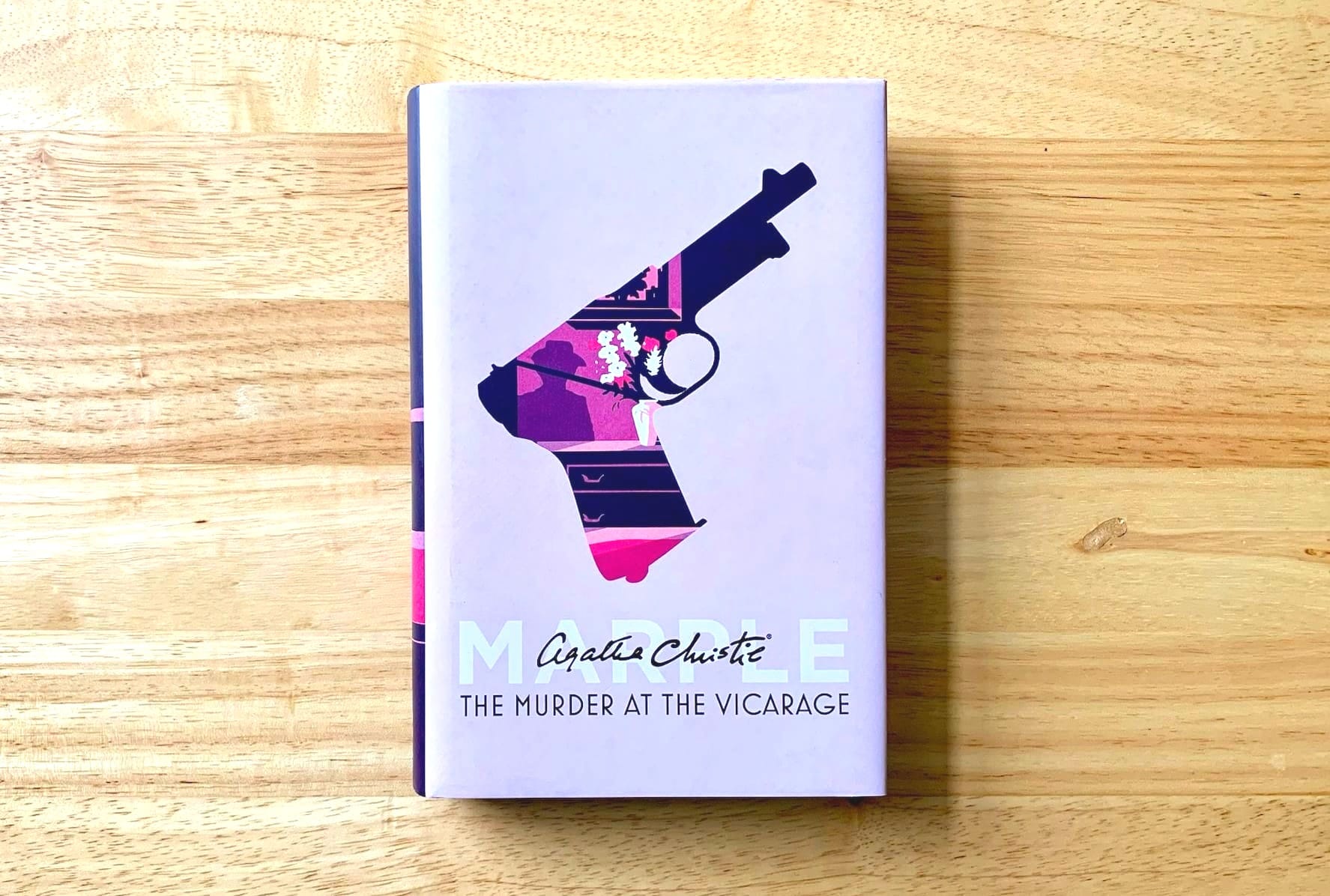
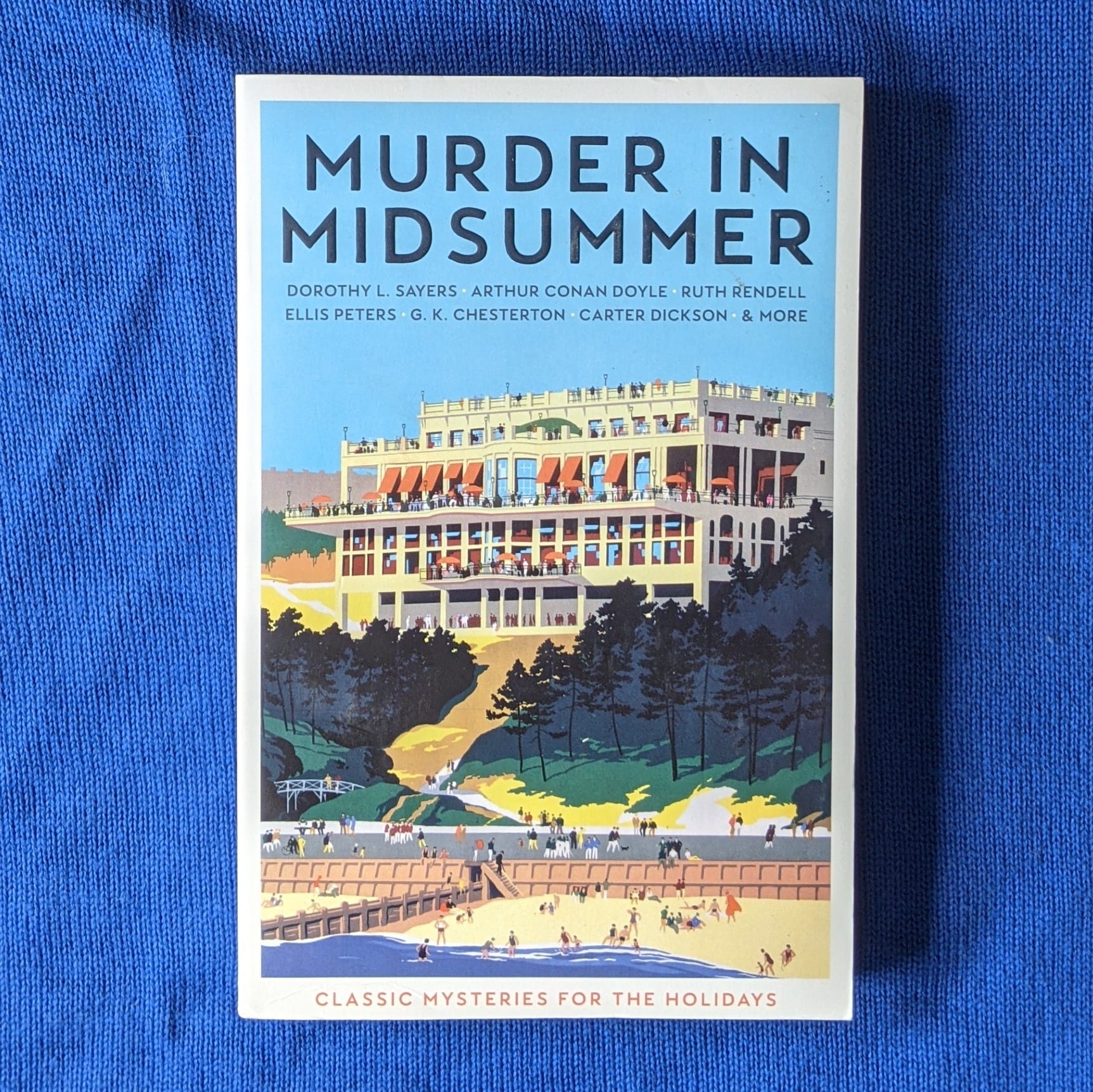
Inside The Poison Book

Dear friends,

It was last autumn, when I was rereading Agatha Christie's The Mysterious Affair at Styles for the Green Penguin Book Club episode on that book, that I began to wonder what the point of the "poison book" really was.

I'm sure you have come across this phenomenon in Christie and other golden age detective fiction too: a character wants to buy a poison and in order to do so she must put her name and address in a book or register kept by the retailer. Often this entry is later shown to be falsified by the subsequent murder investigation, but there never seems to be any serious penalty for this fraud. It's usually just one clue among many others and it didn't seem to be a deterrent to any would-be poisoners. So why do these books even exist?

To find out, I asked Dr Kathryn Harkup, chemist and author of science books including V is for Venom: Agatha Christie's Chemicals of Death, to return to the show to guide me through the twists and turns of nineteenth century pharmaceutical regulation in Britain. Because that is where the poison book originated — with the Arsenic Act of 1851.

Partially in response to arsenic's growing reputation as a deadly and highly available domestic poison, the government made its first attempt to curb who could get their hands on dangerous chemicals. As you'll hear in today's new episode, two more laws followed in the subsequent decades which tried (with limited success) to improve the situation. But by the time the books you'll hear us talking about (see below!) were published in the 1920s and 1930s, the poison book was still such an accepted part of the British shopping experience that interwar crime writers felt no need to explain it to their readers.

📣
You can listen to The Poison Book episode right now on all major audio platforms (just click the icon of your preferred app here to jump right in) as well as on the podcast's website, where there is also a full transcript to read if you prefer that. New episodes are also available on YouTube. If you're in the UK, you can listen ad free on BBC Sounds.

As Kathryn and I were planning this episode, we went back and forth on whether it made more sense to look at this subject in terms of the legislative chronology or through the golden age detective fiction in which the poison book appeared. Ultimately we decided to go through the laws in order and talk about the different questions that arose in each novel as we came to them. I thought I might just give you a little taster of the books we covered here before you dive into the full episode.

Obviously we talked about The Mysterious Affair at Styles, with its fiendish poisoning plot and clever use of the poison book. But we also covered Strong Poison by Dorothy L. Sayers in some detail, since the poison book is a major piece of evidence in the trial of Harriet Vane with which the novel opens. Vane, of course, is accused of poisoning her former lover with arsenic, and her defence is complicated by the fact that she freely admits she had been buying the drug and signing false names for it as part of research for a novel! During our conversation, Kathryn wondered whether Dorothy L. Sayers had ever tested this out for herself, and now I can't stop thinking about this myself. She was so keen on accuracy...

Another title I greatly enjoyed diving into for this episode was Family Matters by Anthony Rolls (keen newsletter readers may remember me mentioning this in our most recent "Reading Recommendation" post). I've never read anything like the poisoning plot in this book and it was fascinating to hear Kathryn's take on the science of it. It also demonstrates another way in which the poison book system was ineffective at preventing crimes. At least one of the substances in this story is known to be highly toxic yet is exempted from the provisions of the law, making it freely available to purchase everywhere. Gulp.

With so much discussion of arsenic, we had to delve into The Wychford Poisoning Case by Anthony Berkeley too. Aside from a couple of bizarre spanking-based scenes (!), this novel is an excellent retelling of the Florence Maybrick case from the 1880s. Berkeley relocates it from Liverpool to the Home Counties and updates the period to the 1920s, but keeps the "too much arsenic" problem that was central to the real-life case.

My memories of this book from when I made the Anthony Berkeley episode with Martin Edwards back in 2020 were that it wasn't that good, but I was pleasantly surprised when I revisited it last month. Some of Roger Sheringham's antics did make me roll my eyes, but Berkeley's facility with turning actual murders into clever fiction was more impressive this time round.

As an extra bonus for loyal newsletter readers who have made it this far, I thought I would also flag a short story that we did discuss, but that had to be cut from the main episode for time. This is “The Boat Race Murder” by David Winser from 1942, which can be found in the British Library Crime Classics anthology Setting Scores. This features the misuse of a patent medicine and the falsification of a poison book... David Winser was both a rowing blue and a medical student, so it's safe to assume that at least some of this story drew on his own experiences. He was sadly killed in action in WW2 in 1944 and so did not live to write more crime fiction, but this story is well worth looking up, I recommend it.

And do let me know as you are reading around the classic crime genre if you discover any other interesting instances of the poison book in golden age detective fiction. I have a feeling that I am only at the beginning of my obsession with this...

Until next time,

Caroline

You can listen to every episode of Shedunnit at shedunnitshow.com or on all major podcast apps. Selected episodes are available on BBC Sounds. There are also transcripts of all episodes on the website. The podcast is now newsletter-only — we're not updating social media — so if you'd like to spread the word about the show consider forwarding this email to a mystery-loving friend with the addition of a personal recommendation. Links to Blackwell’s are affiliate links, meaning that the podcast receives a small commission when you purchase a book there (the price remains the same for you).

Sherlock and Shedunnit

A trip into the Shedunnit archive.

Dear friends,

There are certain topics that are too perfect for Shedunnit, and so even though I think about them all the time, I have never made an episode about them. Sherlock Holmes is one of these.

Let me explain.

The influence of Arthur Conan Doyle's creation on the golden age of detective fiction cannot be overstated. Some of the foremost mystery writers of the 1920s and 1930s — including Agatha Christie and Dorothy L. Sayers — were self-professed fans. Sayers was even something of a Sherlockian; her essay “The Dates in the Red-Headed League” is an exercise in scholarly pedantry that has to be seen to be believed.

Even beyond the explicit references to Holmes as a character, the fundamental structures of client-detective and Holmes-Watson are everywhere in the puzzle-based mystery. It's no accident that an elderly and ailing Conan Doyle was asked to be the first president of the Detection Club (he sadly passed away soon after receiving the invitation and the honour went to G.K. Chesterton instead).

The Sherlock Holmes mural at Baker Street Underground station. Photo by Mingyang LIU
Photo by Mingyang LIU

It's this ubiquity that has stopped me every time I have considered trying to put together a "Sherlock Holmes" episode of Shedunnit. There is just so much to say, and such a knowledgeable audience out there, that I fear anything I might do would be incomplete and unoriginal. And so, I avoid the great detective in favour of subjects that are easier to encapsulate in a 25-35 minute podcast episode.

But the podcast's archive is not a completely Sherlock-free zone. Such is his fame that even when I am avoiding him, he creeps in. Now that we are almost at the midpoint of 2025, I am looking ahead to the first half of next year and thinking about the topics I might cover (yes, I do plan that far in advance)... Maybe it's time to visit 221B Baker Street at last? Let us review his appearances so far, at least.

He popped up earlier this year, in fact, in the "Agatha Christie's Taste in Crime Fiction" episode:

As is so often the case with any consideration of twentieth century crime fiction, Sherlock Holmes is where we must begin. And I think there is a fair case to be made that that is where Agatha Christie began too, in her reading of crime fiction. In her autobiography she explains that it was her sister Madge who, was eleven years older, who introduced her to the sleuth of 221B Baker Street, via the 1892 story "The Adventure of the Blue Carbuncle". Although the chronology nor indeed the contents of the autobiography is not always entirely to be trusted, Christie includes this recollection about Madge and Conan Doyle in a section about this married sister's visit home to Torquay just after her son was born, which was at the end of the summer in 1903. Agatha would have been thirteen, which in my view is just the age to start reading the adventures of Holmes and Watson. She records that aside from "The Blue Carbuncle", it was "The Red-Headed League" and "The Five Orange Pips", which also appeared in 1892's The Adventures of Sherlock Holmes, that she liked best. More experienced Sherlockians might have theories about what unites these three stories, but to me it seems as if these are all tales with an origin point in the mundane and domestic — the loss of a Christmas goose, a strange job advertisement, a peculiar letter. And we know, of course, what good use Agatha herself was going to put such innocuous elements in her own fiction.

It tickles me enormously to think of a teenage Agatha Christie poring over her Sherlock Holmes stories.

A Player's cigarette card showing an illustration from "The Adventures of Sherlock Holmes". Image: George Arents Collection, The New York Public Library. "Sherlock Holmes." The New York Public Library Digital Collections, 1850 - 1959

As keen listeners of the 2022 live episode "A Prize Mystery" might remember, before she became very famous Agatha Christie was a keen entrant in a number of "competition mysteries". I don't know if she entered this one judged by Conan Doyle himself, but I'd like to think she would have had a go:

In March 1927, Sir Arthur Conan Doyle published an article in the Strand magazine in which he finally bid farewell to readers of Sherlock Holmes — making rueful reference to the fact that he had, of course, tried the dispense with the character once already only to resurrect him due to popular demand. But now, as the 1920s were coming to a close, the last collection of Holmes short stories, The Case-Book of Sherlock Holmes was about to be published... To mark this moment of farewell, then, he proposed what he called a small competition as "a little test of the opinion of the public". Conan Doyle wrote his own list of what he considered to be the twelve best Sherlock Holmes stories and left this in a sealed envelope with the editor of the Strand. The reader who wrote in with a list of a dozen titles that mostly closely coincided with the author's own selection would win £100 and an autographed copy of his autobiography, Memories and Adventures. It's not quite the solution to a crime, but it is still a contest between writer and reader. Who knew Sherlock Holmes better, his creator or his fans?

You can read Conan Doyle's full essay and selection here. Apparently the competition winner correctly guessed ten out of twelve stories.

Actor John Wood as Sherlock Holmes in a 1974 Broadway stage production
Actor John Wood as Sherlock Holmes in a 1974 Broadway stage production. Image: Billy Rose Theatre Division, The New York Public Library. The New York Public Library Digital Collections. 1974.

In my 2021 reading experiment, "A Century Of Whodunnits", I read The Return of Sherlock Holmes as my book from the first decade of the twentieth century. Here's what I made of it then:

Turning the pages, it felt a bit like I was reading a kind of source text out of which everything in the next couple of decades was going to expand. "The Adventure of the Empty House" is a clever locked room mystery. "The Adventure of the Dancing Men" is a case that turns on code breaking. "The Adventure of the Solitary Cyclist" is an inheritance mystery. "The Adventure of the Priory School" features a criminal that deliberately tries to hoodwink the detective when it comes to forensic observation. "The Adventure of the Abbey Grange" sees the detective act not only as investigator, but judge and jury too. I could go on. Each story contains at least one aspect that other writers would enhance and develop into entire plots and subgenres in the decades to come.

I think perhaps part of my hesitation to make an episode dedicated solely to Sherlock Holmes stems from the fact that it's been a long time since I read the actual stories. I consume a lot of Holmes at second and third hand, it feels like, through the detective fiction that was influenced by Conan Doyle and the ever-present adaptations, but it's rare that I read the real thing.

William Gillette as Sherlock Holmes in the original stage production from 1900
William Gillette as Sherlock Holmes in the original stage production from 1900. Image: Billy Rose Theatre Division, The New York Public Library. "William Gillette in Act III of Sherlock Holmes" The New York Public Library Digital Collections. 1900

Lastly, since the English season is well under way, I must just touch on the connection between Conan Doyle, crime and cricket. Even though the author was a keen cricketer himself, there are only passing references to the sport in two Sherlock Holmes stories, I learned from making the "Cricket and Crime" episode. That hasn't stopped fans from filling in that gap, though, as my guest Andrew Green explained:

There's two novels in particular that place Holmes at some very kind of significant cricket matches. One of those is by Arunabha Sengupta, and it's a book called Sherlock Holmes and the Birth of the Ashes, which places Holmes at the famous match where the bales were burned to create the ashes, which is what is played for every time England and Australia play each other in a test series. And another book called Sherlock Holmes at the 1902 Test by Stanley Shaw. Other people have decided that they want to bring cricket into Holmes in a way that Doyle didn't.

So, what do you think? Should a Sherlock Holmes episode of Shedunnit be something I work towards? Is there anything that I can add to the already-vast canon of Sherlockian thought? I will, as ever, value your input here.

Until next time,

Caroline

You can listen to every episode of Shedunnit at shedunnitshow.com or on all major podcast apps. Selected episodes are available on BBC Sounds. There are also transcripts of all episodes on the website. The podcast is now newsletter-only — we're not updating social media — so if you'd like to spread the word about the show consider forwarding this email to a mystery-loving friend with the addition of a personal recommendation. Links to Blackwell’s are affiliate links, meaning that the podcast receives a small commission when you purchase a book there (the price remains the same for you).