
Detective Fiction As Time Travel
Dear listeners,
I love to be transported by the crime fiction that I read. Settings that are nothing like my everyday life, whether that's a boat on the Nile or a sheep farm in New Zealand, are always welcome. Most of all, though, I like books that take me to a different time and show me aspects of it that a non-fiction history would never cover.
I've talked about this effect a little on the podcast before, in my episode about E.C.R. Lorac's World War Two novels. Because she was writing while the war was still going on, rather than looking back on it with hindsight, we get little glimpses of what it was like to live through chaotic events, rather than remember them afterwards.
For instance: in Lorac's 1944 novel Checkmate to Murder, a Special Constable, an older man drafted in a voluntary capacity to support a police force depleted of younger recruits by the war, plays a significant role. A bit of research revealed that some factions of the public resented these "amateur" cops, as one character terms this one. No doubt this figure would have been entirely recognisable to Lorac's contemporary readers. Decades later, this day-to-day irritation of wartime life had faded in significance. Fiction can show us such things as they appeared at the time in a way that history often can't.
This brings me to the book at the heart of today's new episode: The Conjure-Man Dies by Rudolph Fisher:
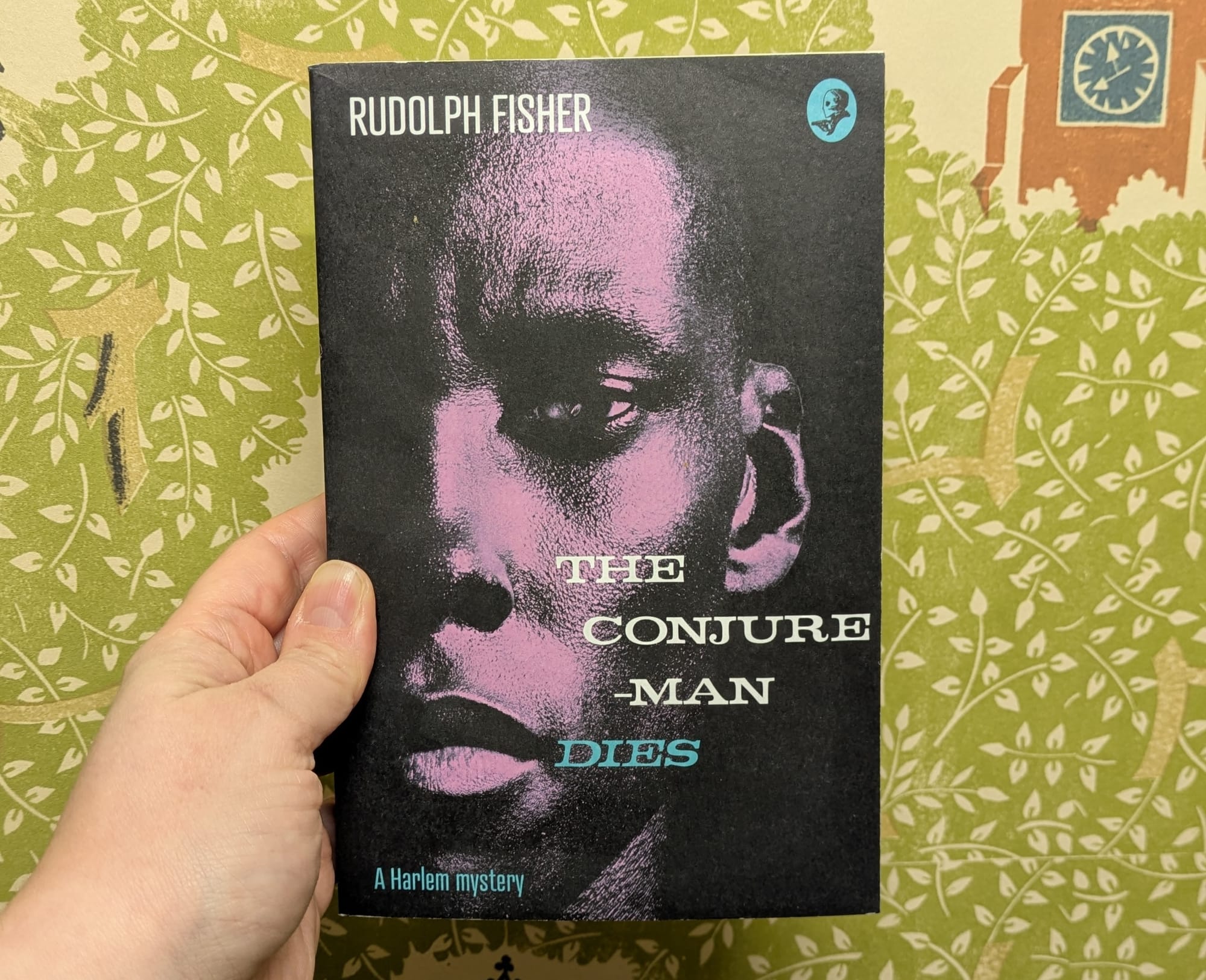
I first read this book last year, when the Shedunnit Book Club chose to focus on it for our "Lesser Known Author" month. It was first published in 1932 and vividly renders the neighbourhood of New York where he worked as a hospital doctor: Harlem. Its clever plot brings together people from different class backgrounds and walks of life in a fortune-teller's waiting room and then holds them there as a murder is investigated.
The Conjure-Man Dies is a portal that can transport today's reader back to a place and an era that they have never personally experienced. Its writing is evocative and specific: Fisher uses sensory descriptions and rich dialogue to place the reader there with the characters on the streets of Harlem in the early 1930s. And the mystery doesn't play second fiddle either. This is an accomplished debut novel by a writer who has since been hailed as the "most gifted short-story writer of the Harlem Renaissance". He intended to write more detective fiction, too, but sadly died just two years after this book was published at the far too young age of 37.
In this episode, I'm considering how The Conjure-Man Dies achieves this time travel effect and what we can take from it into our appreciation of other crime fiction from the interwar years. I hope you'll come on this voyage with me! You can safely listen if you haven't read the book yet — I've been careful to avoid any significant spoilers.
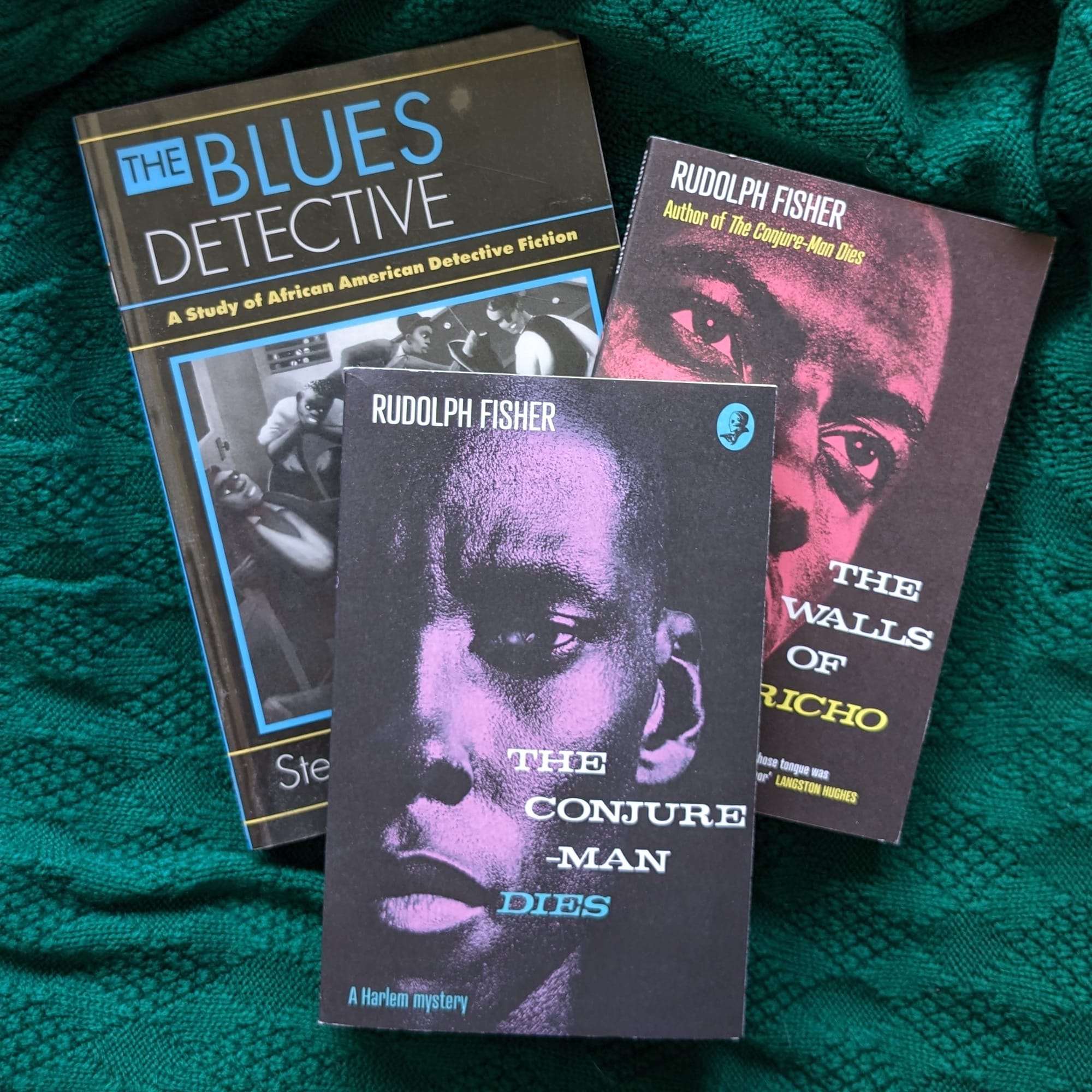
I became rather interested in Rudolph Fisher after reading The Conjure-Man Dies. I picked up a copy of his only other novel, The Walls of Jericho, and also this critical study of African-American Detective fiction by Stephen Soitos — I would recommend both to any listeners keen to do a deeper dive.
I'd be fascinated to know: what are your favourite "time travel" detective novels? Which whodunnits do you find especially transporting? Reply to this email to let us know, or leave a comment to share your thoughts with other readers and see theirs in turn.
Also, I wanted to say a big thank you to everyone who responded to last week's rather nostalgic newsletter. It warmed my heart to hear how many of you have listened to every episode of the podcast, sometimes multiple times! And to those who use it to drop off to sleep, I promise I won't do any sudden jumpscares...
Until next time,
Caroline
You can listen to every episode of Shedunnit at shedunnitshow.com or on all major podcast apps. Selected episodes are available on BBC Sounds. There are also transcripts of all episodes on the website. The podcast is now newsletter-only — we're not updating social media — so if you'd like to spread the word about the show consider forwarding this email to a mystery-loving friend with the addition of a personal recommendation.