Newsletter

Get weekly updates from Caroline all about golden age detective fiction.

Investigating a Death on Paper

Dear listener,

For today's new episode, I am venturing into the world of epistolary crime novels. This is the kind of mystery where the story is told through a series of letters or documents rather than a continuous prose narrative. There is a strong tradition of this format within crime fiction, from the Victorian era...

The Moonstone by Wilkie Collins, an epistolary crime novel from 1868

...to recent 2020s bestsellers like The Appeal by Janice Hallett. The attraction of this style of storytelling is the emphasis it puts on the game being played between writer and reader. And it's very much a game played on paper. With the primary evidence in the case — such as interview transcripts, diaries and newspaper cuttings — made available verbatim, the reader can take a much more active part in solving the mystery instead of just reading about the progress of the fictional detective. At the same time, creating and assembling the fragments gives the writer ample opportunity to conceal clues and create red herrings while appearing to share everything with the utmost transparency.

It's no surprise that this type of novel was particularly popular during the interwar golden age of detection, given that games and puzzles of all types were all the rage during these difficult years when people needed benign distractions. As I've previously covered on the podcast, crosswords were a big part of this puzzle craze, as were treasure hunts, board games and jigsaws. I think the recent success of novels like those of Janice Hallett, which are presented entirely as a dossier of documents, and puzzle books like Murdle, point to the fact that we are once more coping with hard times by immersing ourselves in fictional riddles and mysteries.

📣
You can listen to this episode right now on all major audio platforms (just click the icon of your preferred app here to jump right in) as well as on the podcast's website, where there is also a full transcript to read if you prefer that. New episodes are also available on YouTube. If you're in the UK, you can listen ad free on BBC Sounds.

One of the things I came to enjoy about epistolary crime novels as I was working on this episode was the visual variety that the format offers. And the newsletter offers me the chance to showcase some of my favourite examples!

Let's look first at Death on the Down Beat by Sebastian Farr, which is the book I teased at the end of last week's newsletter.

Carrying the excellent subtitle of "an orchestral fantasy of detection", this novel is formed from letters written by a Scotland Yard Inspector to his wife while he is away investigating the murder of an orchestra conductor mid-concert.

What makes it stand out to me, though, are the other elements that he includes to help her understand the case alongside his letters, such as an extract from the score for the music that the orchestra was playing at the fatal moment:

We also get a full list of all the orchestra personnel and their ranks:

Plus this hand-drawn plan of their seating arrangements:

I'm also partial to the way Nicholas Blake uses the epistolary elements of his 1938 novel The Beast Must Die to bamboozle the reader.

Look at this diaristic opening! It's so dramatic:

Pray, a moment for this rather fun cover for Busman's Honeymoon:

This isn't an entirely epistolary novel, of course, but the "Prothalamion" section at the start is told in this way via letters and diary extracts. Hopefully you can see some of the different elements on the page here broken up by italic headings:

Finally, to end where we began, I wanted to highlight that you can get an edition of The Moonstone that is introduced by Dorothy L. Sayers (look for secondhand copies of the J. M. Dent & Sons edition from the 1940s):

I think this one does a nice, understated job of introducing each new epistolary element of the narrative:

I hope you enjoy one or more of these books after listening to the episode, and perhaps find a renewed appreciation for the effort that goes into crafting a mystery this way.

Until next time,

Caroline

You can listen to every episode of Shedunnit at shedunnitshow.com or on all major podcast apps. Selected episodes are available on BBC Sounds. There are also transcripts of all episodes on the website. The podcast is now newsletter-only — we're not updating social media — so if you'd like to spread the word about the show consider forwarding this email to a mystery-loving friend with the addition of a personal recommendation. Links to Blackwell’s are affiliate links, meaning that the podcast receives a small commission when you purchase a book there (the price remains the same for you).
Three Books That Live On My Desk

The reference works that make Shedunnit possible.

Dear listeners,

A few weeks ago I, along with a number of Shedunnit Book Club members, attended the Bodies from the Library conference at the British Library in London. It was a lovely day out, if rather warm, and one full of interesting detective fiction insights. If you survey the programme, you'll notice that several repeat Shedunnit guests were among those speaking!

It was one talk in particular that came to mind when I was deciding what to write you about today: Jake Kerridge and Moira Redmond's discussion of a "Golden Age Reference Shelf". Moira has helpfully posted the list of fifteen non-fiction books they talked about here on her blog — it encompasses Julian Symons, H.R.F. Keating and much more. There are some old favourites on there and others (Dilys Winn) that were new to me.

I wish I was organised enough to have a dedicated space for my non-fiction books about detective fiction, but I'm not. They are in a few different places around the house and when I have a sudden need for, say, a biography of Josephine Tey I dash around to all the possible shelves until I find it.

There are, however, three books from this golden age reference category that live permanently on my desk, and I thought it might be interesting to take a look at them together.


The Golden Age of Murder by Martin Edwards

Although this is a very digestible book that can absolutely be read cover to cover like a novel, I use it all the time as a reference work. It contains a couple of very handy appendices: one showing the full list of pre-1950 Detection Club members and their dates of election, and another giving the original "rules" and Club oath. There's also an index of titles that is incredibly useful and a bibliography that has inspired many an episode.

The revised and updated edition that was published earlier this year for the book's tenth anniversary is a substantial expansion on the original, as you can see from their relative sizes below. I haven't yet had time to read all of the new sections front to back, but as I've been magpie-ing my way through via the index I've already encountered some fascinating new material. The new chapter about thriller writers was especially interesting given the conversation I had with Kate Jackson for the episode about The Man in the Dark.

Martin, of course, has been a regular guest on Shedunnit over the years (and you'll be hearing from him again very soon!). My favourite episode we've done together to date is "The Psychology of Anthony Berkeley" from 2020 because Martin is such a passionate and knowledgeable Berkeley fan.


Agatha Christie's Secret Notebooks by John Curran

This magnificent work of scholarship was, I think, originally published in two volumes: "Secret Notebooks" and "Murder in the Making". I have this combined hardback edition and I very rarely talk about an Agatha Christie story or novel without checking its entry in here first.

The principal attraction of the book is that it contains Christie's own notes, organised chronologically by the publication dates of her stories and books. Thus, if I'm working on something that references Sad Cypress, say, I will take myself to Part III: The Third Decade and see what notes survive for that book. In addition to being able to see Christie's thought process on the page, the accompanying critiques that John Curran provides are excellent. He makes connections between books and contextualises what Christie was writing with what else was going on in her life. It wasn't until I started using this book, for instance, that I truly understood just how often she repeated the same plots!

Unlike The Golden Age of Murder, I do think this is a true reference book and I wouldn't consider it bedtime reading. It does contain some previously unpublished short stories, though, which are worth seeing.

You can hear John Curran talking about The Murder on the Links by Agatha Christie in this Green Penguin Book Club episode from 2024.


Dorothy L. Sayers: Her Life and Soul by Barbara Reynolds

Sayers has not been quite so well served by biographers as Christie. There are quite a few — I own at least five biographies of her — but they tend to come at her with a specific angle, whether through her translation work, her religious writing or her crime fiction. I have yet to read a really good, well-written holistic portrait of her. However, when I just want to know what Sayers was doing or thinking at any given time, I turn to this book by her friend and fellow translator Barbara Reynolds, which was first published in 1993.

Reynolds took on the work of finishing the translation of The Divine Comedy that Sayers left unfinished at her death and became the chairman of the Dorothy L. Sayers Society. She also edited the five volume series The Letters of Dorothy L. Sayers (which I also have and like but which does not fit on my desk, it is very heavy all together).

I think Barbara Reynolds probably had the best access to Sayers' personal material in the late 20C and was the best-equipped to make sense of it. Her writing is rigorous and her tone is warm without being overly sycophantic. It's not a long or comprehensive biography, but it amply covers all the bases and I dip into it often when I'm working on anything that mentions Sayers.

Barbara Reynolds sadly died in 2015 when this podcast was but a twinkle in my eye. However, I think you can feel the influence of this book most strongly in "The Advertising Adventures of Dorothy L. Sayers" episode from 2023.


I hope you find some reading inspiration there, or perhaps some ideas for sources for your own detective fiction related research. I'd be happy to write about other reference works I rate again in future if readers find it interesting.

In these in between-episode newsletters, I thought I might start giving a hint, for those who enjoy puzzling out clues, about the subject of next Wednesday's new episode via a book title. This time, I suggest that you might like to take a closer look at Death on the Down Beat by Sebastian Farr...

Until next time,

Caroline

You can listen to every episode of Shedunnit at shedunnitshow.com or on all major podcast apps. Selected episodes are available on BBC Sounds. There are also transcripts of all episodes on the website. The podcast is now newsletter-only — we're not updating social media — so if you'd like to spread the word about the show consider forwarding this email to a mystery-loving friend with the addition of a personal recommendation. Links to Blackwell’s are affiliate links, meaning that the podcast receives a small commission when you purchase a book there (the price remains the same for you).

The Man in the Dark

A closer look at John Ferguson's foggy 1928 "Ealing mystery".

Dear listeners,

It's Green Penguin Book Club time again! And we have reached the tenth crime, or green, title in the original Penguin series: The Man in the Dark by John Ferguson.

My copy is a 1952 reprint, by the way — I certainly don't have "full collection of first editions" money.

I had never heard of this book before I embarked on this reading project. That's one of the things that attracted me to doing this, actually. As well as getting to revisit some well-loved classics like The Unpleasantness at the Bellona Club by Dorothy L. Sayers and The Mysterious Affair at Styles by Agatha Christie, the requirement to read all of the Penguin crime titles in order brings me into contact with some books that were popular in their day but have long since rather faded from view. The Missing Moneylender by W. Stanley Sykes from earlier this year was definitely one of those and The Man in the Dark is another.

This book was first published in 1928 and joined the Penguin series in July 1936. It introduces a regular detective character for Ferguson, the Scottish private investigator Francis McNab, and also provides us with the first glimpse of a recurring Watson in the Fleet Street journalist Godfrey Chance. It's told in four "acts" that vary in format between third person narration, first person account and a witness statement. It straddles the divide between thriller and detective fiction.

As for what it's about, this summary from the inside cover of my edition does a rather good job of explaining:

That reads: "Murder on a foggy night at Ealing in the presence of a down-and-out who couldn't see the crime; a long car drive taking two people to hide for a while in the country; pursuit by journalists; a blind man's love affair; the criminal's escape finally and dramatically prevented. These are the ingredients of a part-mystery, part-adventure story which describes with equal brilliance and from both angles the problems of the hounds and the dodges of the hares."

I hope that has whetted your appetite for the episode, if not for the book itself!

📣
You can listen to this episode right now on all major audio platforms (just click the icon of your preferred app here to jump right in) as well as on the podcast's website, where there is also a full transcript to read if you prefer that. New episodes are also available on YouTube. If you're in the UK, you can listen ad free on BBC Sounds.

So who was John Ferguson? He wasn't a member of the Detection Club, nor did his ten crime novels foster him a reputation that lasted much beyond his death in 1952. He is an intriguing figure, nonetheless — an episcopalian minister from Perthshire in Scotland who lived all over the place, including in Guernsey and in Kent, and who wrote popular plays about Scottish history as well as crime fiction.

You might be slightly more familiar with one of his 1930s novels, Death of Mr Dodsley, because it was republished a couple of years ago by the British Library Crime Classics series. I reviewed this bookshop-based mystery in the most recent edition of our reading recommendations newsletter (I liked the setting but thought the pacing was off). I wanted to read another Ferguson title and Dodsley was the only one that I found to be readily available.

By the end of our discussion, my guest Kate Jackson (of the excellent Cross Examining Crime blog) and I had decided that, although we might not go rushing out looking for more John Ferguson books, we still felt curious about his work.

In her review of one of his other novels, Night in Glengyle, Dorothy L. Sayers expressed herself more taken with his pure thrillers than his novels of detection. She wrote that "in the excitement of the chase your reviewer quite forgot to be cunning and was properly taken aback by the surprise-packet at the end". I think I might like to try one of those and see if I feel the same.

His Guernsey-set novel Death Comes to Perigord also intrigues me, partly because I am curious about the place and partly because this was the book that enabled Ferguson to make the advantageous move from his previous publisher to the Collins Crime Club. Surely this means the book has some interesting features? If you have read this or any of his others, do let me know how you found them. You can reply to this email or leave a comment on the website.

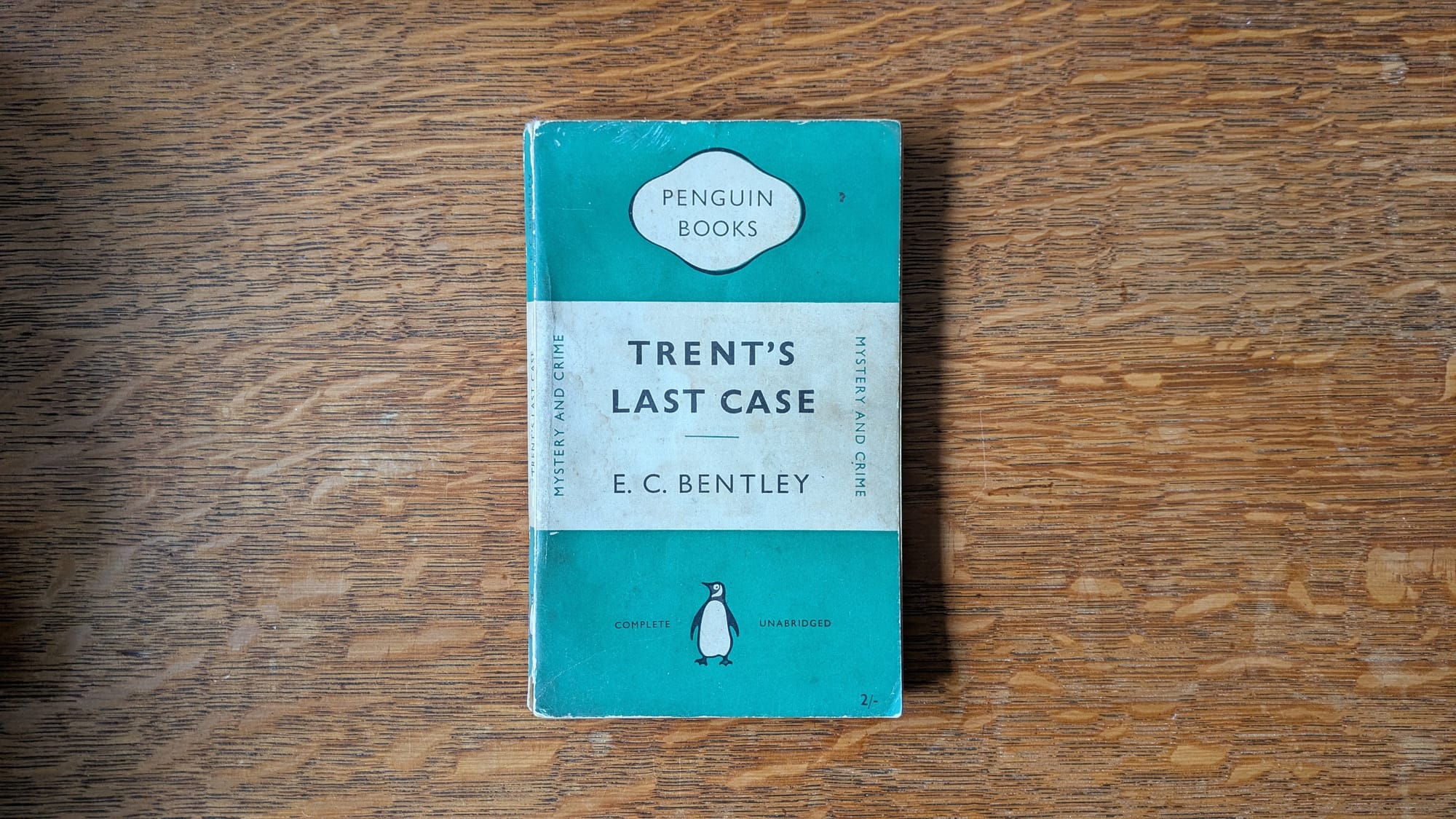
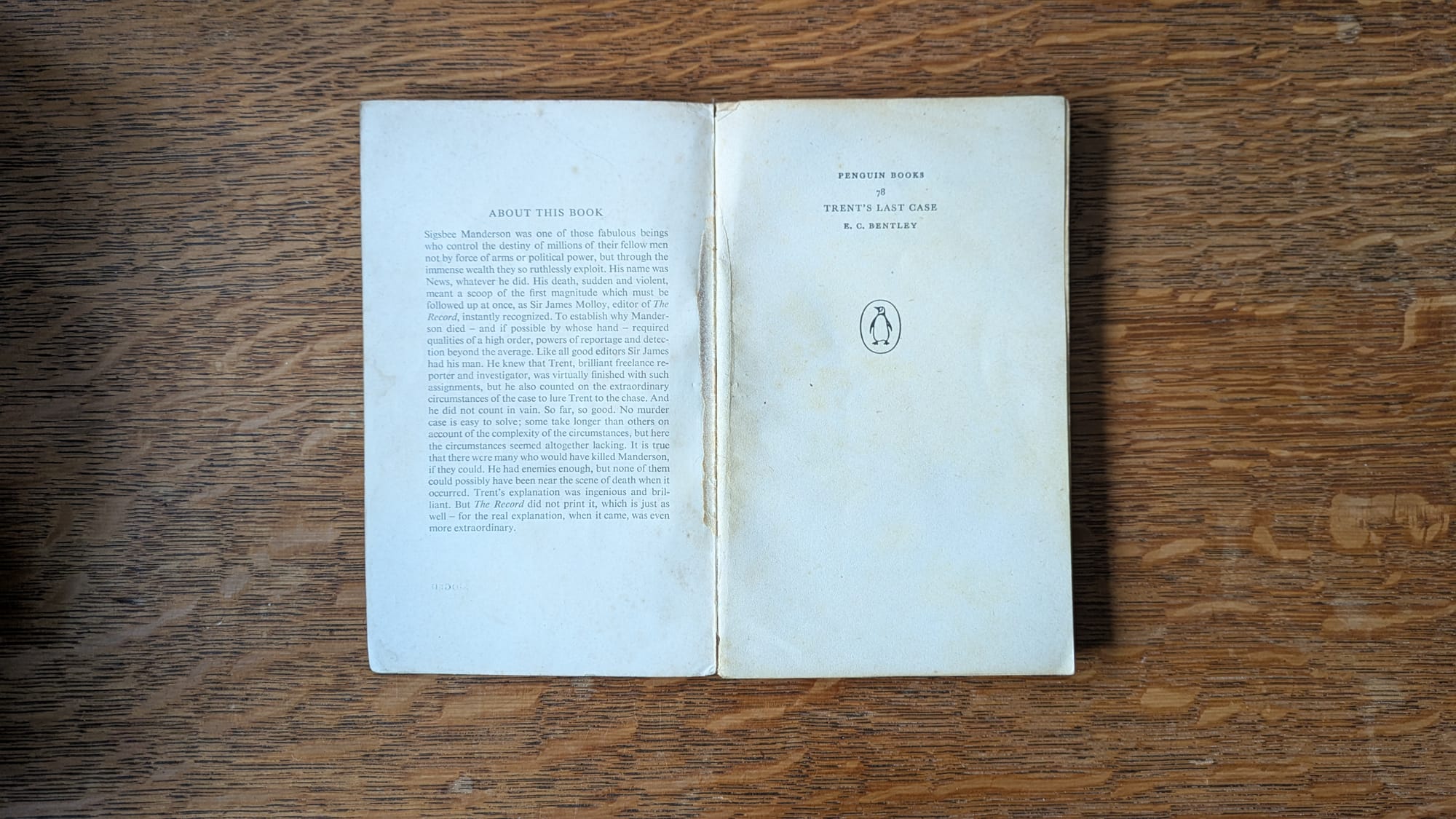
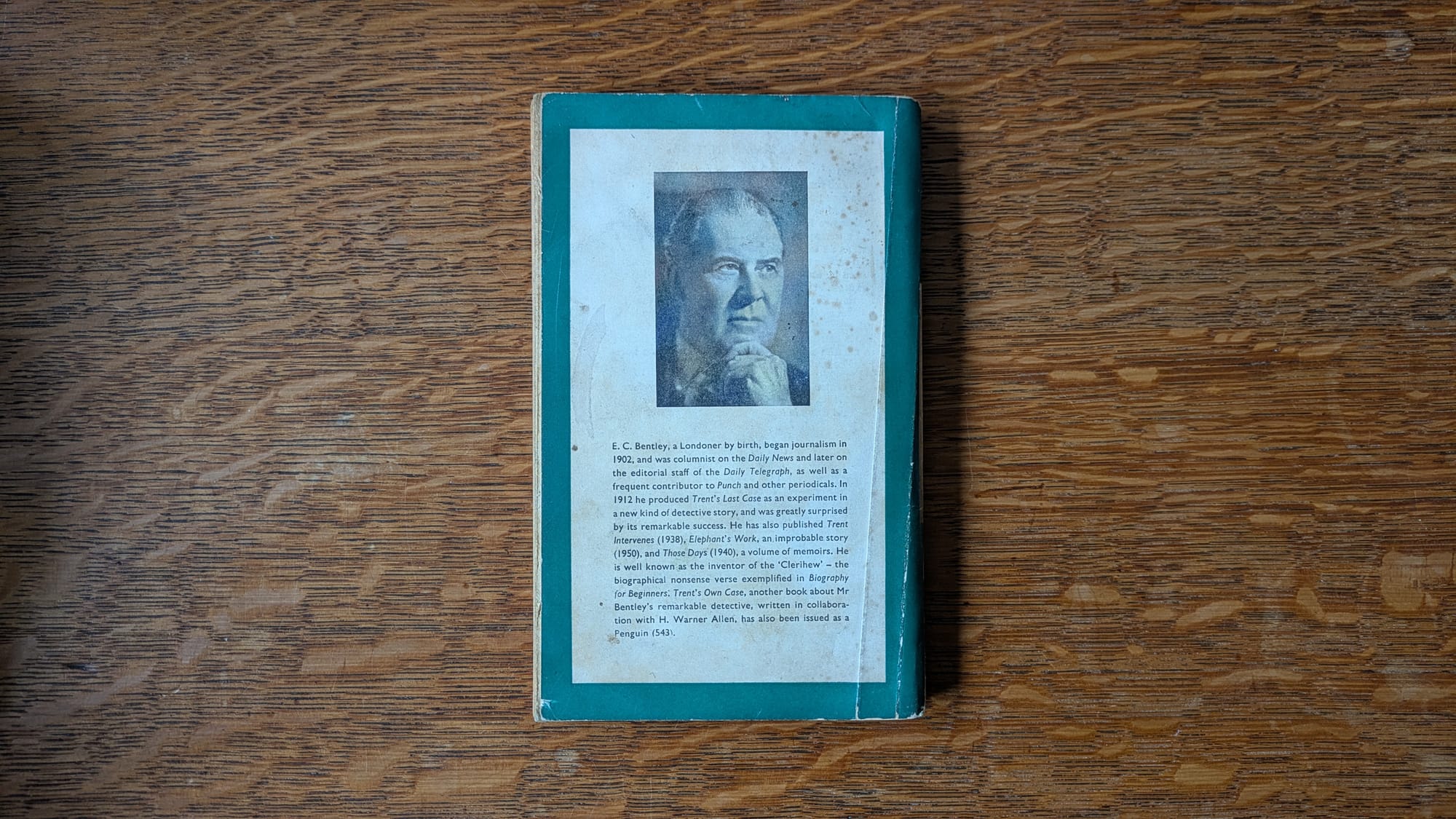
The next book to get the Green Penguin Book Club treatment will be Penguin 78, Trent's Last Case by E.C. Bentley. Look out for that episode in September!

Until next time,

Caroline

You can listen to every episode of Shedunnit at shedunnitshow.com or on all major podcast apps. Selected episodes are available on BBC Sounds. There are also transcripts of all episodes on the website. The podcast is now newsletter-only — we're not updating social media — so if you'd like to spread the word about the show consider forwarding this email to a mystery-loving friend with the addition of a personal recommendation. Links to Blackwell’s are affiliate links, meaning that the podcast receives a small commission when you purchase a book there (the price remains the same for you).